
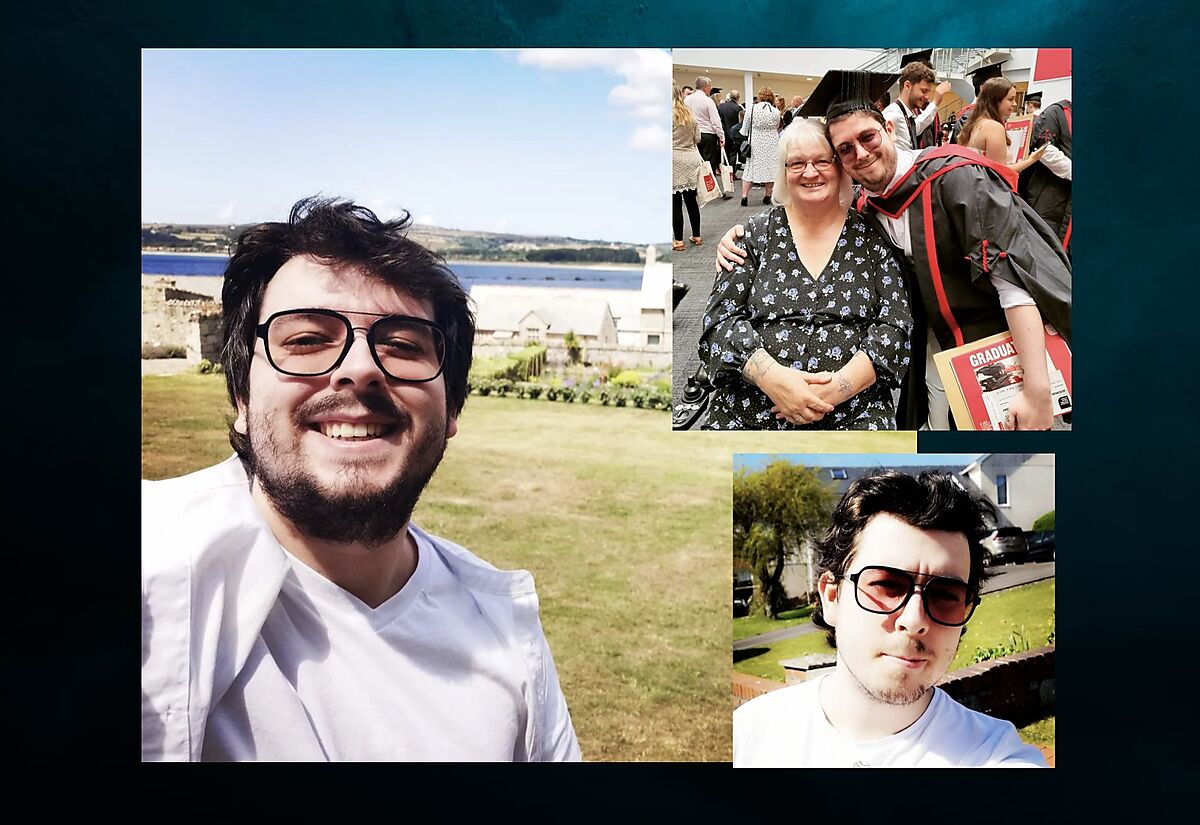
Mum and Me
Life Beyond Care

I’m struggling emotionally, too hollow to shed a tear, so how can I remain silent when something needs to change?
The University of South Wales offers mentoring; a sort of therapy. I had been in a very dark place for a long time, and I’d always scoffed at the idea of therapy but by this point, I didn’t know where else to turn. I’d been meeting with my mentor for a while, and just as I had expected, it was all pointless. I could not bring myself to tell him my problem — until, that is, I cracked during a particular session.
With trembling, teeth-clenching bitterness, I confessed to this complete stranger that I was my mum’s carer and self-appointed personal therapist. I’ve been caring for my wheelchair-bound mum since I was 16, and it had never been a burden; this responsibility had always seemed so normal, but by my MA the creeping deterioration of mum’s health had become such a crushing weight on me mentally that I couldn’t carry it alone anymore. I couldn’t bear the things I had to hear, see, and do. With brutal honesty, I said that I didn’t want to be caring for my mum in the same way 20 years on when I’d be in my 40s. I wanted to live my own life.
Then I was overcome with guilt for these selfish and evil thoughts. Did that mean I wanted to see my mum wither and die alone?
Add to this the hard slog of studying for an MA and all the personal crises that came with it, I was a worn-out shell — torn inside, with no direction. I was frustrated that the person I thought I wanted to be was always changing. Every time I made progress towards that fictional persona I’d created, I’d subconsciously move the goalposts. I didn’t know why.
My mentor patiently waited for me to gather myself, and as I finally drew breath, I had the sudden and profound realisation that before my life could change something had to change inside of me.
My mentor helped me understand that it was a great privilege for my mum to trust me to the extent she did with what sometimes felt like a burden; loved ones could never truly be a burden, and my mum’s physical deterioration didn’t have to be a reflection of the change for which I aspired within myself.
I wasn’t aware that I understood empathy when I was a teenager. I had simply learned how to care for and love those closest to me through caring for my mum. I didn’t know that this was a part of growing up. In the mentor’s office that day, I realised that it doesn’t matter if who I want to be changes — it matters that I try. And after all the time spent trying to better myself, I will look back and see how different I am. That’s the real change.