
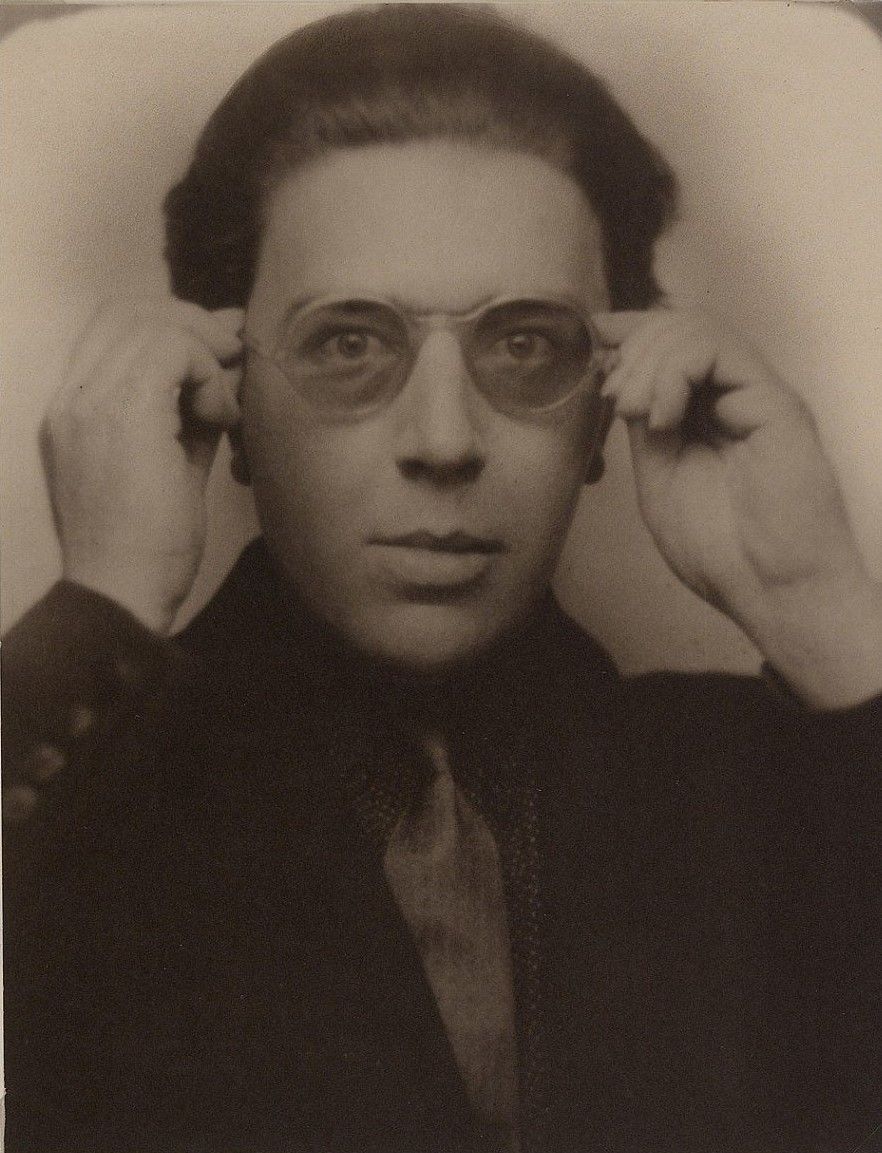
André Breton, 1924
André Breton(1896-1966)
André Breton was a French essayist and poet best known for providing the intellectual underpinnings for the surrealist art movement and championing it during his lifetime.
He was born in 1896 in Normandy, France to a family of modest means. He studied medicine, developing an interest in psychoanalysis and mental illness, evening visiting Sigmund Freud in Vienna in 1921. He was drafted into the medical corps during WW1 when he served as an assistant in a psychiatric hospital in Nantes, France.
Breton published his first Surrealist Manifesto in 1924 as a booklet (Editions du Sagittaire). The document defined surrealism as
‘Psychic automatism... Dictated by thought, in the absence of any control exercised by reason, exempt from any aesthetic or moral concern.’
Breton had ambitions for the movement beyond the artistic realm, claiming that its basic tenets could be applied to all circumstances of life.
Breton joined the French Communist Party in 1927, from which he was expelled in 1933. In 1938, he travelled to Mexico on a commission from the French government, where he met Leon Trotsky and Frida Kahlo, before returning to France.
In 1941, during WW2, Breton escaped to the United States, where a year later he organised a ground-breaking surrealist exhibition at Yale University. He returned to Paris in 1946, fostering a second group of surrealists.
André Breton died at the age of 70 in 1966, and was buried in the Cimetière des Batignolles in Paris.
He was born in 1896 in Normandy, France to a family of modest means. He studied medicine, developing an interest in psychoanalysis and mental illness, evening visiting Sigmund Freud in Vienna in 1921. He was drafted into the medical corps during WW1 when he served as an assistant in a psychiatric hospital in Nantes, France.
Breton published his first Surrealist Manifesto in 1924 as a booklet (Editions du Sagittaire). The document defined surrealism as
‘Psychic automatism... Dictated by thought, in the absence of any control exercised by reason, exempt from any aesthetic or moral concern.’
Breton had ambitions for the movement beyond the artistic realm, claiming that its basic tenets could be applied to all circumstances of life.
Breton joined the French Communist Party in 1927, from which he was expelled in 1933. In 1938, he travelled to Mexico on a commission from the French government, where he met Leon Trotsky and Frida Kahlo, before returning to France.
In 1941, during WW2, Breton escaped to the United States, where a year later he organised a ground-breaking surrealist exhibition at Yale University. He returned to Paris in 1946, fostering a second group of surrealists.
André Breton died at the age of 70 in 1966, and was buried in the Cimetière des Batignolles in Paris.
André Breton adapted from Wikipedia and licensed by The Cultural Me under CC BY SA 3.0