
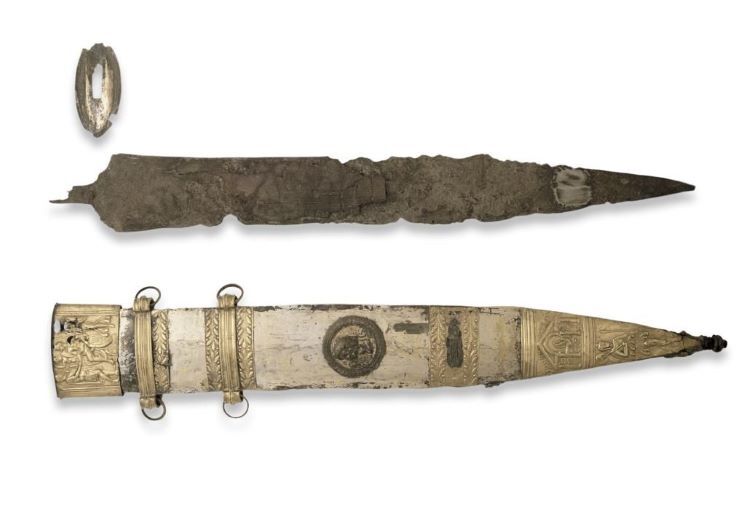
Sword of Tiberius
Legion — Life in the Roman Army
From family life on the fort to the brutality of the battlefield, experience Rome's war machine through the people who knew it best — the soldiers who served in it.
The Roman Empire spanned more than a million square miles and owed its existence to its military might. By promising citizenship to those without it, the Roman army, the West's first modern, professional fighting force, also became an engine for creating citizens, offering a better life for soldiers who survived their service.
Expansive yet deeply personal, this exhibition transports you across the empire, as well as through the life and service of a real Roman soldier, Claudius Terentianus, from enlistment and campaigns to enforcing occupation then finally, in Terentianus' case, retirement. Objects include letters written on papyri by soldiers from Roman Egypt and the Vindolanda tablets, some of the oldest surviving handwritten documents in Britain. The tablets, from the fort near Hadrian's wall, reveal first-hand what daily life was like for soldiers and the women, children and enslaved people who accompanied them.
What did life in the Roman army look like from a soldier's perspective? What did their families make of life in the fort? How did the newly conquered react? Legion explores life in settled military communities from Scotland to the Red Sea through the people who lived it.
Visitors are advised that this exhibition contains human remains. The British Museum is committed to curating human remains with care, respect and dignity.
The Roman Empire spanned more than a million square miles and owed its existence to its military might. By promising citizenship to those without it, the Roman army, the West's first modern, professional fighting force, also became an engine for creating citizens, offering a better life for soldiers who survived their service.
Expansive yet deeply personal, this exhibition transports you across the empire, as well as through the life and service of a real Roman soldier, Claudius Terentianus, from enlistment and campaigns to enforcing occupation then finally, in Terentianus' case, retirement. Objects include letters written on papyri by soldiers from Roman Egypt and the Vindolanda tablets, some of the oldest surviving handwritten documents in Britain. The tablets, from the fort near Hadrian's wall, reveal first-hand what daily life was like for soldiers and the women, children and enslaved people who accompanied them.
What did life in the Roman army look like from a soldier's perspective? What did their families make of life in the fort? How did the newly conquered react? Legion explores life in settled military communities from Scotland to the Red Sea through the people who lived it.
Visitors are advised that this exhibition contains human remains. The British Museum is committed to curating human remains with care, respect and dignity.
Definition of The British Museum from britishmuseum.org under fair use