
Ovid’s ‘Fasti’

Artists
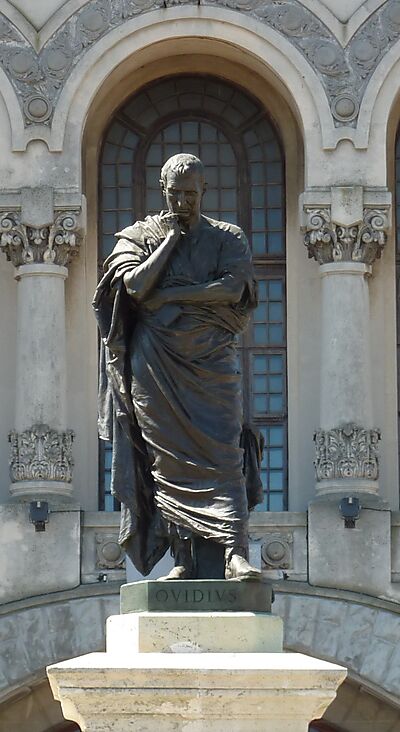
Ovid (43BCE–17CE) was a Roman poet who lived in the time of the emperor Augustus.
At the time, the word ‘fasti’ was used to describe chronological lists, often lists of official religious events. Ovid’s poem Fasti (8CE) is essentially a chronology of Roman festivals, told through episodes in which the poet encounters Roman gods and goddesses who relate the origins of Roman customs.
Fasti is composed of 12 books, one for each month of the year. Of these only the first six months, January to June, have survived.
In contrast to Ovid’s more irreverent earlier works, Fasti is a patriotic poem that celebrates Rome’s greatness through its mythological past.
At the time, the word ‘fasti’ was used to describe chronological lists, often lists of official religious events. Ovid’s poem Fasti (8CE) is essentially a chronology of Roman festivals, told through episodes in which the poet encounters Roman gods and goddesses who relate the origins of Roman customs.
Fasti is composed of 12 books, one for each month of the year. Of these only the first six months, January to June, have survived.
In contrast to Ovid’s more irreverent earlier works, Fasti is a patriotic poem that celebrates Rome’s greatness through its mythological past.
ov-ids fahsti/ˈɒvɪds fɑːsti/