
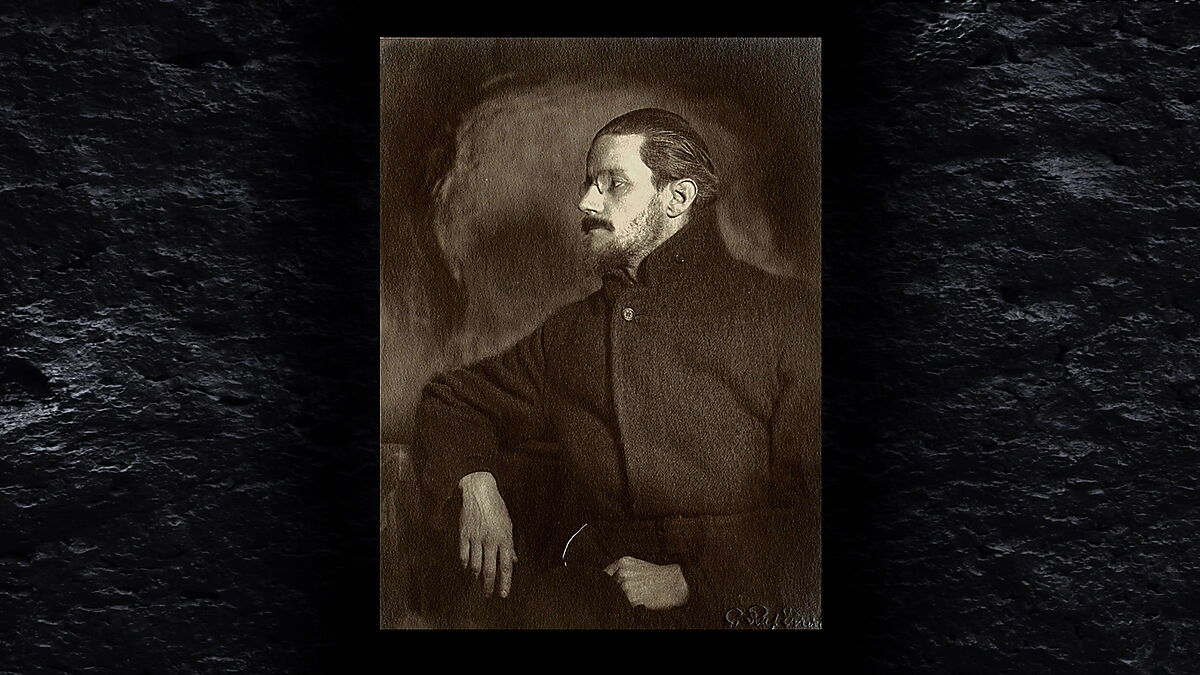
A Portait of James Joyce as a Young Man
Writing a Modern Ireland: James Joyce’s ‘A Portrait of the Artist as a Young Man’ (1916)
On 31 October 1904, the same month as he had left Dublin on a ‘self-imposed exile’1, James Joyce wrote to his father asking for ‘all the news’2 of Ireland since his departure. Joyce had left because he knew that if he stayed the oppressive traditions he saw as holding Ireland back from modernity would eventually suffocate him as well. But Ireland was also the land of his upbringing for which he felt a protective nostalgia.
Joyce explores this troubled relationship in A Portrait of the Artist as a Young Man (1916), a semi-autobiographical novel following Dubliner Stephen Dedalus from childhood to youth. The novel is set in the late 1800s, a time when Ireland was ruled from Westminster, and various organisations were agitating for Home Rule. Chief among them was the Irish Parliamentary Party of Charles Parnell. However, opposition to his leadership from the Catholic clergy, his subsequent fall from grace, and death in 1891, dealt a blow to Irish hopes for achieving independence through constitutional means.
Parnell is mentioned throughout Portrait, most memorably during a Christmas dinner, where family friend Mr Casey mourns his ‘dead king’3. In describing Parnell as a ‘king’, Joyce shows just how established English sovereignty had become: the fight for independence simply the chance to serve a different leader. Parnell, however, is a divisive figure: his affair with a married woman made his leadership abhorrent to many Catholics. Joyce uses the figure of Dante (Mrs Riordan), the family governess, to represent the religious heart of Ireland. Although Dante loves Ireland just as much as Mr Casey, for her it is ‘God and religion before everything!’4, and she vehemently condemns the dead Parnell’s moral failings.
The young Stephen, who is a witness to these divisive politics, occupies a curiously detached quarter. When a school friend later chides Stephen for not getting involved in politics, he declares that ‘when the soul of a man is born in this country, there are nets flung at it to hold it back from flight’5. For Stephen these nets include all of ‘nationality, language, religion’6. To him both Mr Casey’s nationalism and Dante’s religion are simply different sides of the same coin.
Joyce too clearly felt caught by these ‘nets’, and even admitted to his wife Nora in 1904 that he had left the Church, ‘hating it most fervently’7. The letter, from the same year in which his self-imposed exile begins, shows his flight from the nets of nationality and religion. The modernist style of literature that Joyce helped foster allowed him to escape the final ‘net’: language. Joyce departed radically from traditional literary tropes of characters struggling against physical hardship to find fortune or love. In Portrait we learn more about what Stephen thinks than what he does, and the past often blends together with the present and future. With his modernist stream-of-consciousness style, Joyce is able to fully express his thoughts of Ireland, and portrays his argument that for Ireland to progress, it must let go of the past.
When Stephen describes the nets holding an Irishman’s soul, he adds, ‘I shall try to fly by those nets’8. In Portrait, Stephen is constantly forced to think about the future of Ireland as either British or Catholic. Through his modernist style, Joyce suggests a third option: for Stephen to be a part of a new, modern consciousness for Ireland, one which could thrive free from all remnants of its traditions.
References
- Bartholomew Ryan. "Mythologising the Exiled Self in James Joyce and Fernando Pessoa". Pessoa Plural. 4. 2013. 75-103. 86
- Richard Ellmann (ed.). Selected Letters of James Joyce. London: Faber & Faber. 1975. p 41
- James Joyce. A Portrait of the Artist as a Young Man. London: Wordsworth Classics. 2001. p 29
- James Joyce. A Portrait of the Artist as a Young Man. London: Wordsworth Classics. 2001. p 28
- James Joyce. A Portrait of the Artist as a Young Man. London: Wordsworth Classics. 2001. p 157
- James Joyce. A Portrait of the Artist as a Young Man. London: Wordsworth Classics. 2001. p 157
- Richard Ellmann (ed.). Selected Letters of James Joyce. London: Faber & Faber. 1975. p 25
- James Joyce. A Portrait of the Artist as a Young Man. London: Wordsworth Classics. 2001. p 157

This is my second piece about Joyce for The Cultural Me, and I’ve enjoyed exploring his work even more than the first time. Having family in Ireland, Joyce’s reasons for leaving his homeland have always interested me, and in researching Portrait, I feel as though I’ve been able to piece together previously unknown pieces of my own family history as well as the context behind one of my favourite novels.— Elise Czyzowska