
Toraja
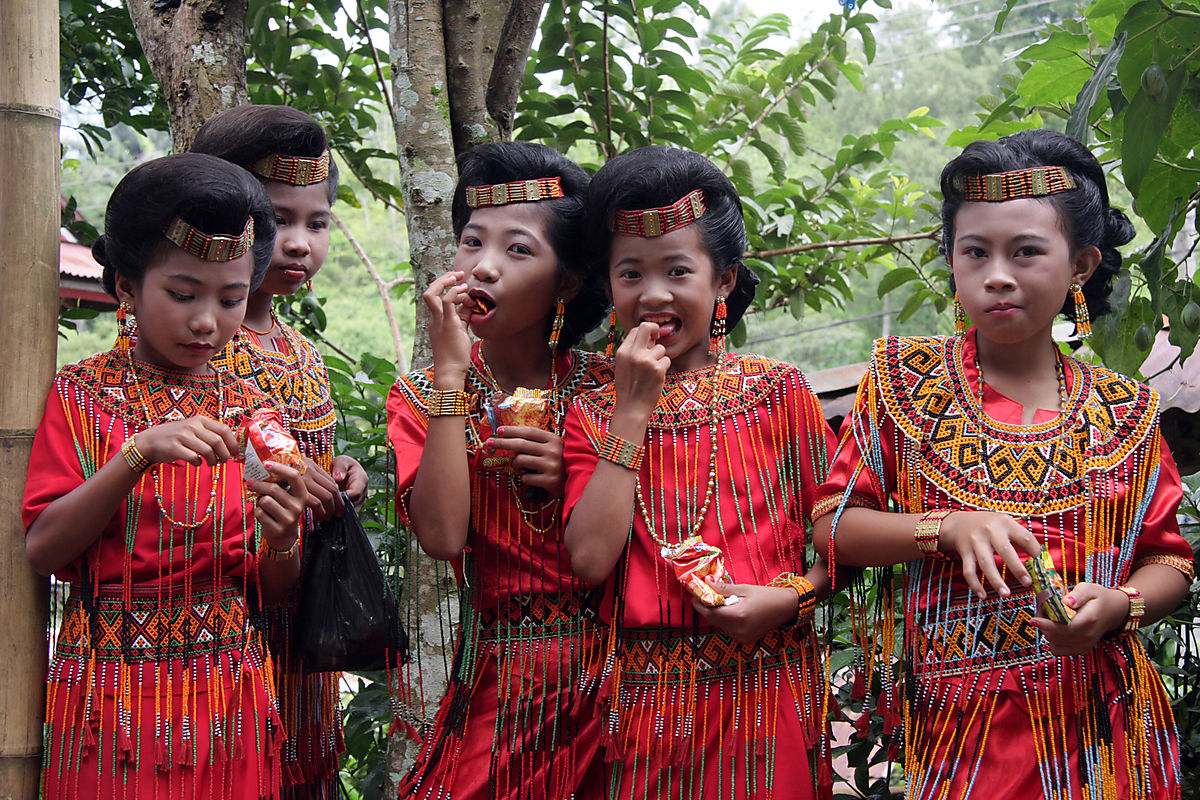
Young Torajan girls welcoming guests to a wedding on the island of Sulawesy
The Toraja are an ethnic group indigenous to a mountainous region of South Sulawesi, Indonesia. Their population is approximately 1,100,000, of whom 450,000 live in the regency of Tana Toraja ("Land of Toraja").
The word Toraja comes from the Buginese language term to riaja, meaning "people of the uplands". The Dutch colonial government named the people Toraja in 1909.
Torajans are renowned for their elaborate funeral rites, burial sites carved into rocky cliffs, massive peaked-roof traditional houses known as tongkonan, and colourful wood carvings. Toraja funeral rites are important social events, usually attended by hundreds of people and lasting for several days.
Most of the population is Christian, and others are Muslim or have local animist beliefs known as aluk ("the way"). By the 1990s, when tourism peaked, Toraja society had changed significantly, from an agrarian model—in which social life and customs were outgrowths of aluk —to a largely Christian society.
Today, tourism and remittances from migrant Torajans have made for major changes in the Toraja highland.
The word Toraja comes from the Buginese language term to riaja, meaning "people of the uplands". The Dutch colonial government named the people Toraja in 1909.
Torajans are renowned for their elaborate funeral rites, burial sites carved into rocky cliffs, massive peaked-roof traditional houses known as tongkonan, and colourful wood carvings. Toraja funeral rites are important social events, usually attended by hundreds of people and lasting for several days.
Most of the population is Christian, and others are Muslim or have local animist beliefs known as aluk ("the way"). By the 1990s, when tourism peaked, Toraja society had changed significantly, from an agrarian model—in which social life and customs were outgrowths of aluk —to a largely Christian society.
Today, tourism and remittances from migrant Torajans have made for major changes in the Toraja highland.
Toraja adapted from Wikipedia and licensed by The Cultural Me under CC BY SA 3.0