
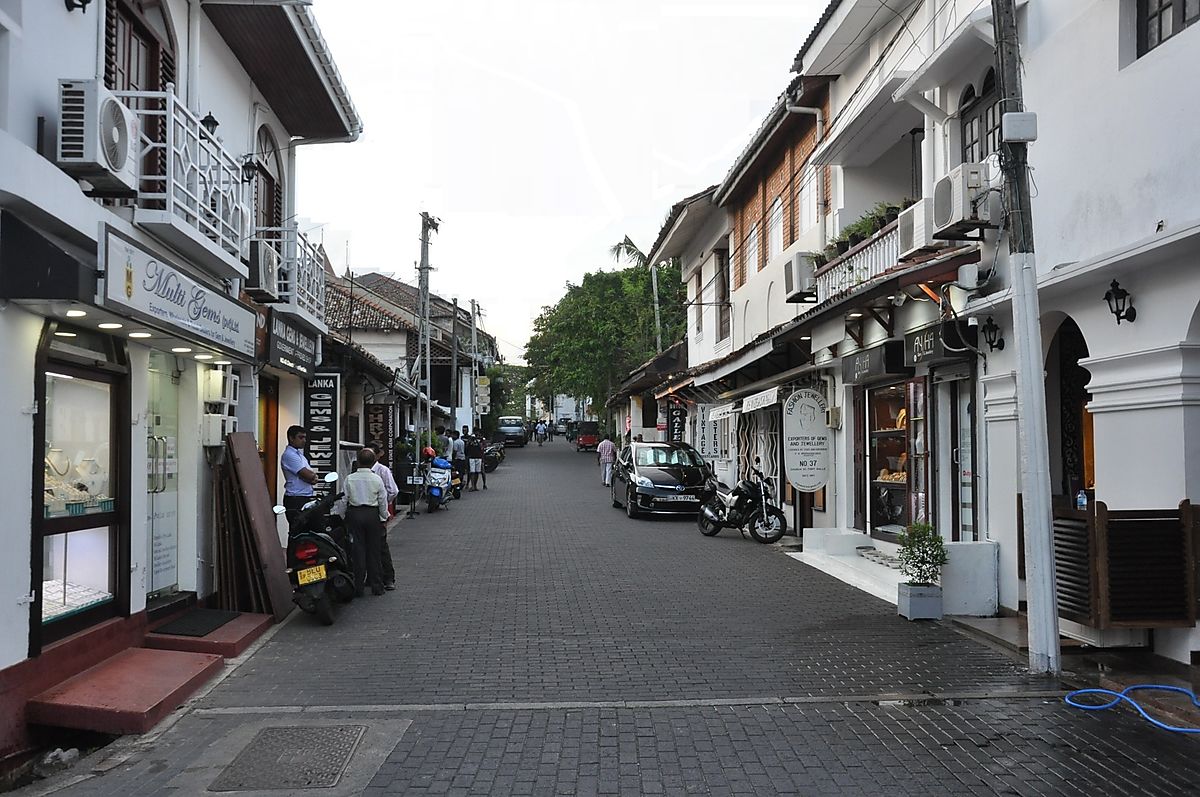
Leyn Baan Street, Galle Fort, Sri Lanka
The Streets of the Old Dutch Fort in Galle, Sri Lanka
The quaint street names of the old fort in Galle, Sri Lanka bear legacy to the city’s Dutch colonial past. After capturing the fort from the Portuguese in 1649, the Dutch fortified the site with ramparts, and granite and coral bastions, ensuring its preservation.
Leyn Baan Street is one of the few street names not anglicised by the British who overthrew the Dutch in 1796. The name comes from the Dutch Lijnbaan or ropewalk, a possible reference to the toddy tappers of Sri Lanka, or perhaps in reference to a street where coir rope was spun.
Lighthouse Street does not lead directly to a lighthouse. The old lighthouse built by the British in 1848 was destroyed by fire in 1934. The new structure is located some 150 metres east of the original site.
Marskramerstraat was anglicised to Pedlar Street, a literal translation. The identity of the pedlars referred to here is unknown. Traders in Sri Lanka at that time were predominantly from the Muslim or Chettie (Tamil) social group.
Chando Street was Chiandostraat under the Dutch. The term Chiando is possibly a remnant from the Portuguese for “squawking”, as it does not correspond to the Dutch language per se.
The church referred to in Church Street or Kerkstraat is probably the ancestor of the present-day Groote Kerk (Dutch Reformed Church) built in 1755, located just to the north of the street.
Parawa Street was Parruasstraat during the Dutch period. The name most probably derives from the Paravar community of fishermen and maritime traders from South India who may have had a presence in the fort.
Leyn Baan Street is one of the few street names not anglicised by the British who overthrew the Dutch in 1796. The name comes from the Dutch Lijnbaan or ropewalk, a possible reference to the toddy tappers of Sri Lanka, or perhaps in reference to a street where coir rope was spun.
Lighthouse Street does not lead directly to a lighthouse. The old lighthouse built by the British in 1848 was destroyed by fire in 1934. The new structure is located some 150 metres east of the original site.
Marskramerstraat was anglicised to Pedlar Street, a literal translation. The identity of the pedlars referred to here is unknown. Traders in Sri Lanka at that time were predominantly from the Muslim or Chettie (Tamil) social group.
Chando Street was Chiandostraat under the Dutch. The term Chiando is possibly a remnant from the Portuguese for “squawking”, as it does not correspond to the Dutch language per se.
The church referred to in Church Street or Kerkstraat is probably the ancestor of the present-day Groote Kerk (Dutch Reformed Church) built in 1755, located just to the north of the street.
Parawa Street was Parruasstraat during the Dutch period. The name most probably derives from the Paravar community of fishermen and maritime traders from South India who may have had a presence in the fort.