
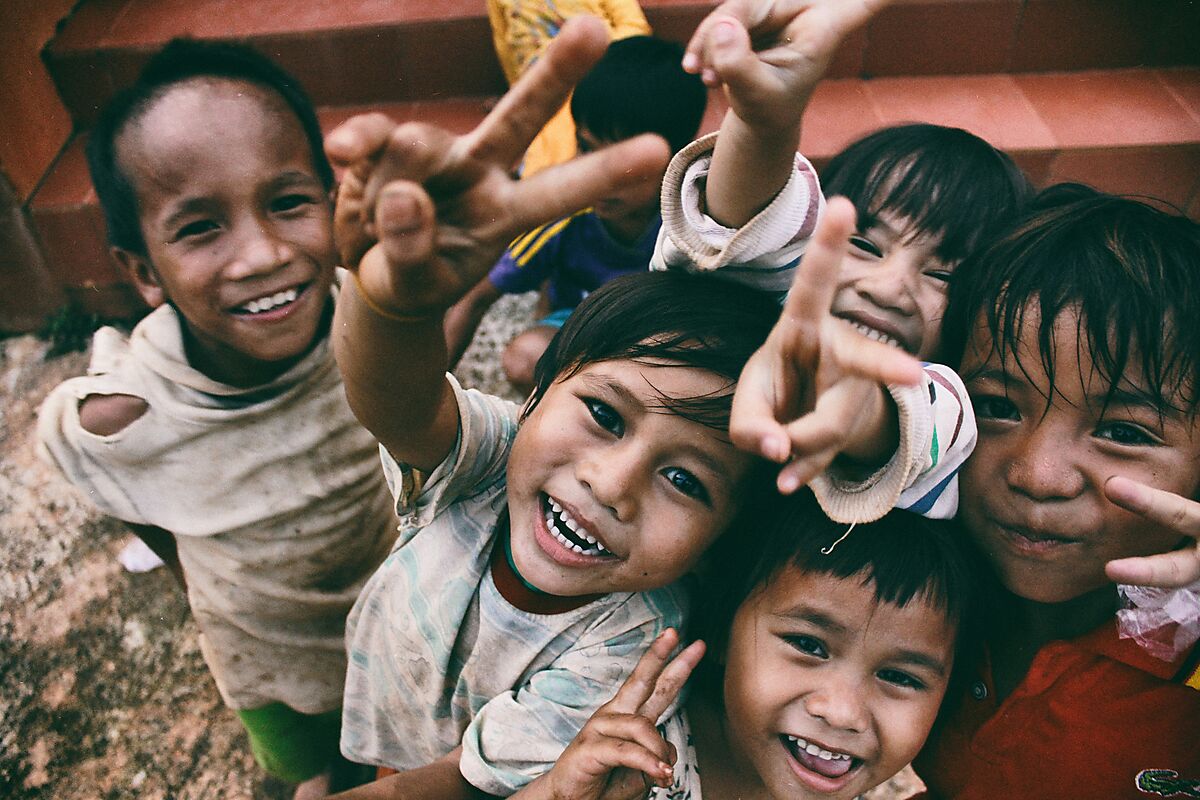
Children of the World
The Six Cultures Study of Socialisation (1954) — Cultural Influences on Childhood Social Behaviours
In 1938, the 30-year-old John WM Whiting and Beatrice B Whiting, six years his junior, crossed paths at Yale University as doctoral students in anthropology. They would later marry and in the early 1950s begin a collaborative professional journey at Harvard University.
At the time, the socio-political environment in the aftermath of World War II had stimulated an interest in gaining a scientific understanding of human behaviours in societies — beyond those of the Western industrialised nations. The Whitings and their colleagues recognised the need for a interdisciplinary lens in cross-cultural research incorporating the perspectives of anthropology, psychology, and sociology1 to understand how societies function, the many ways in which people lead their lives, and the pathways through which children and young individuals navigate the cultural environment that surround them on their journey to adulthood. By bridging interdisciplinary boundaries, the Whitings aimed to offer a comprehensive understanding of the relationships between individual behaviours, cultural norms, and the broader societal framework.
Simultaneously, throughout the 1950s, many cross-cultural researchers influenced by the work of Franz Boas, Margaret Mead, and Ruth Benedict embraced the idea of cultural relativism2. This paradigm shift underlined the importance of understanding and interpreting other cultures within their own context rather than through the lens of one’s own cultural biases (ie the rejection of ethnocentrism). Anthropologists increasingly engaged in immersive fieldwork, living among the communities they studied3. This ethnographic approach allowed researchers to observe and document socialisation practices firsthand, providing rich, context-specific insights into the upbringing of children in different cultures.
In 1954, the Whitings launched a cross-cultural study known as The Six Cultures Study of Socialisation to understand how culture shapes children’s social behaviour. They purposefully selected a sample of societies to represent a diverse range of cultures. The selected towns or villages were Nyansongo in the Western Province of Kenya; Juxtlahuaca in Oaxaca, Mexico; Tarong in Luzon, the Philippines; Taira in Okinawa, Japan; Khalapur in Uttar Pradesh, India; and Orchard Town in New England, United States. Six pairs of investigators, usually husband and wife teams, were sent to these societies to observe the behaviour of children aged three to eleven in an effort to learn the ways in which culture impacts the lives of children.
The Whitings and their research team developed a methodology to record behavioural observations which were then collated by field teams and local research assistants. They closely monitored the daily routines of a total of 134 children, evenly divided between 67 girls and 67 boys, grouped into four sex-age categories: 3 to 6 years old and 7 to 11 years old. This thorough effort resulted in the documentation of nearly 2,000 five-minute observation periods, totaling around 10,000 recorded interactions4.
During their observations, the researchers identified common social interactions among children such as helping and supporting each other, being friendly, seeking help or attention, striving for leadership, taking responsibility, showing aggression, and engaging in physical contact. Taking into consideration the socio-economic systems and family structure across the six cultures, the research team broadly categorised the children’s social interactions into four social-behavioural systems: nurturant- responsible (offers help, offers support, suggests responsibly), dependent dominant (seeks help, seeks attention, seeks dominance), sociable intimate (acts sociably, assaults sociably, touches) and authoritarian aggressive (reprimands, assaults)5.
Based on the socio-economic system of the societies such as degree of occupational specialisation, differentiation of settlement pattern, political centralisation, social stratification, and religious specialisation, the Whitings’ research distinguished two types of cultures — simple and complex6. In simpler cultures like Kenya, Mexico, and the Philippines, children tend to offer help, support, and act responsibly. In complex cultures like India, the United States, and Japan, children were observed as often seeking help, attention, and dominance.
These differences were linked to how children learn in their cultural environments, influenced by the tasks assigned to them and the workload of mothers. While women in all six societies were responsible for the care of children, preparing food, cooking for the family, and keeping the house clean, mothers in the simpler societies had more work to do, requiring them to delegate tasks to children, making them more involved in important activities. A greater proportion of children from the simpler cultures were expected to help out on important economic and domestic tasks more than were children from the complex cultures7.
These findings underscore the early and profound impact of cultural influences on children’s social behaviours, with values such as nurturance, responsibility, success, authority, and casual intimacy being culturally transmitted before the age of six.
Family structure also played a role in influencing children’s social behaviours. In nuclear household structures (consisting solely of parents and their children) common to the Philippines, Mexico, and the United States, children tended to be more sociable and affectionate, possibly because both parents were actively involved in family life. In extended family households such as those in Japan, India, and Kenya, children showed more authoritarian and aggressive behaviours, possibly influenced by a more hierarchical and authoritarian structure. An extended household was seen as hierarchical in structure because multiple generations often coexisted, including children, parents, and grandparents with authority over decision making held by the elders of the family.8
Eventually, the Whitings’ research findings laid the foundations for an observational study of the behaviour of children in non-Western cultures and for a more nuanced understanding of how cultural contexts shape the development of fundamental social behaviours in children.
John Whiting died in 1999 and Beatrice in 2003. Their legacy, The Six Cultures Study, has played a pivotal role in helping to mark a shift towards interdisciplinary collaboration, and the adoption of research perspectives that promoted cultural relativism. Today, more than 50 years since its initiation, in an increasingly interconnected world, the Whitings’ study, by shedding light on how children of different cultures develop, has proved to have enduring relevance, underlining the importance of appreciating and respecting cultural differences in a globalised world.
References
- Carolyn P. Edwards and Marianne Bloch. "The Whitings’ Concepts of Culture and How They Have Fared in Contemporary Psychology and Anthropology". Journal of Cross-Cultural Psychology. 41, no. 4. 2010. 485-498. pp.485-498
- Louis Menand. "How Cultural Anthropologists Redefined Humanity". The New Yorker. 2019
- Katie Nelson. "Doing Fieldwork: Methods In Cultural Anthropology". in Nina Brown, Thomas McIlwraith, Laura Tubelle de González, 2<sup>nd</sup> edn (ed.). Perspectives: An Open Introduction to Cultural Anthropology, 2nd Edition. Virginia: The American Anthropological Association. 2020. pp. 1-12. p. 3
- Robert A. LeVine. "The Six Cultures Study: Prologue to a History of a Landmark Project". Journal of Cross-Cultural Psychology. 41, no. 4. 2010. pp. 513–521. pp. 513–521
- Beatrice B. Whiting and John W. M. Whiting. Children of Six Cultures: A Psycho-Cultural Analysis. Cambridge: MA: Harvard University Press. 1975. pp.128-129
- Beatrice B. Whiting and John W. M. Whiting. Children of Six Cultures: A Psycho-Cultural Analysis. Cambridge: MA: Harvard University Press. 1975. p.82
- Beatrice B. Whiting and John W. M. Whiting. Children of Six Cultures: A Psycho-Cultural Analysis. Cambridge: MA: Harvard University Press. 1975. p.83
- Beatrice B. Whiting and John W. M. Whiting. Children of Six Cultures: A Psycho-Cultural Analysis. Cambridge: MA: Harvard University Press. 1975. p.119

I learned about the Whitings’ Six Cultures Study of Socialisation during my graduate program. This was the spark that ignited my interest in culture studies. The study’s exploration of childhood socialisation in non-Western societies intrigued me about the ways in which cultural contexts shape children’s behaviour early on. It encouraged me to reflect deeply on the universal and culture-specific elements of human development. Through this article, I aim to highlight the importance of these insights, emphasising the need to embrace and respect cultural similarities and differences in our diverse world.— Deepa Srivastava PhD