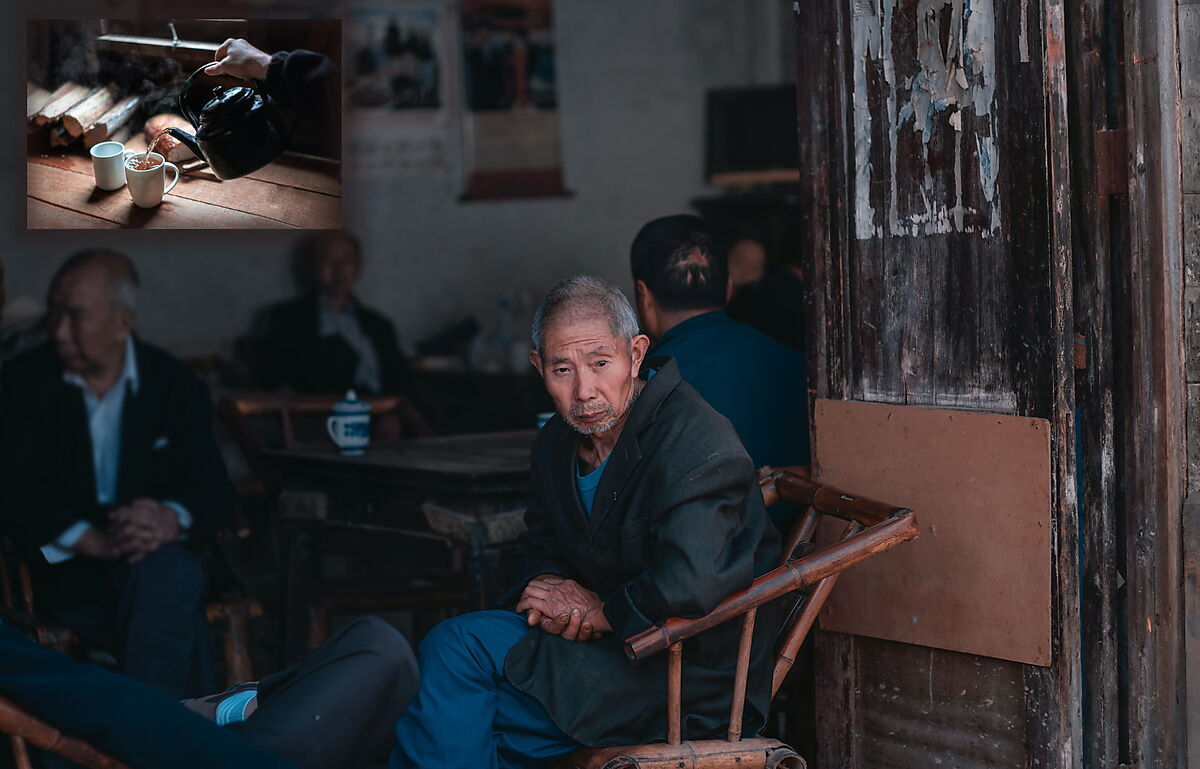
It is often said that every business decision in China begins with a cup of tea. As early as the 2nd century BCE, tea drinking was a refined ritual, practiced by Chinese emperors and nobles.1 By the 9th century, following the writer Lu Yu’s seminal monograph The Classic of Tea (760), which describes the origins, processing, and rituals of tea, the custom spread to the masses, with early Tea Booths (Chatan) and Small Teahouses (Chaliao) emerging across China. During the Song dynasty (960–1279), the teahouse — now a larger, formalised institution — became an integral feature of Chinese communities, a place where residents met to socialise, play cards and enjoy the entertainment on display.2
In the 20th century, the old distinctions between ‘literati tea’ and ‘commoner tea’ gradually eroded as society grew more equal.3 Teahouses now provided a forum for stimulating conversations, ranging from national issues to more local concerns, such as tax policies.4
It was this potential for teahouses to act as hubs for political debate that later led to their enforced closure during China’s Cultural Revolution (1966–76).5 Chairman Mao’s Red Guards denounced the tea-sipping culture as both ‘vain’ and ‘heretical’,6 and its symbols were either quickly removed or destroyed in their path. The Teahouse would only emerge as a safe environment for open discourse following Mao’s death in 1976.
Despite their turbulent history, teahouses today are an allure for China’s domestic and foreign visitors, with extensive menus and cabaret performances.7 Many modern, stripped-back readaptations have emerged to cater for the younger generation of tea drinkers.8 Although China’s transformation to a ‘socialist market economy’ has witnessed the influx of Western coffee shops, the teahouse remains an integral symbol of urban Chinese identity.
I have long enjoyed a good cup of tea, so, unsurprisingly, the origins of tea, the history of tea culture in Asia and its spread to the Western world, has fascinated me. Upon visiting Teahouses whilst in China, I was introduced to these authentic institutions and their ancient practices. Here I take a brief look back at their interesting history and the role they play in modern Chinese society.