
The Representation of the Working Classes in Millet's Art
The Representation of the Working Classes in Millet’s Art

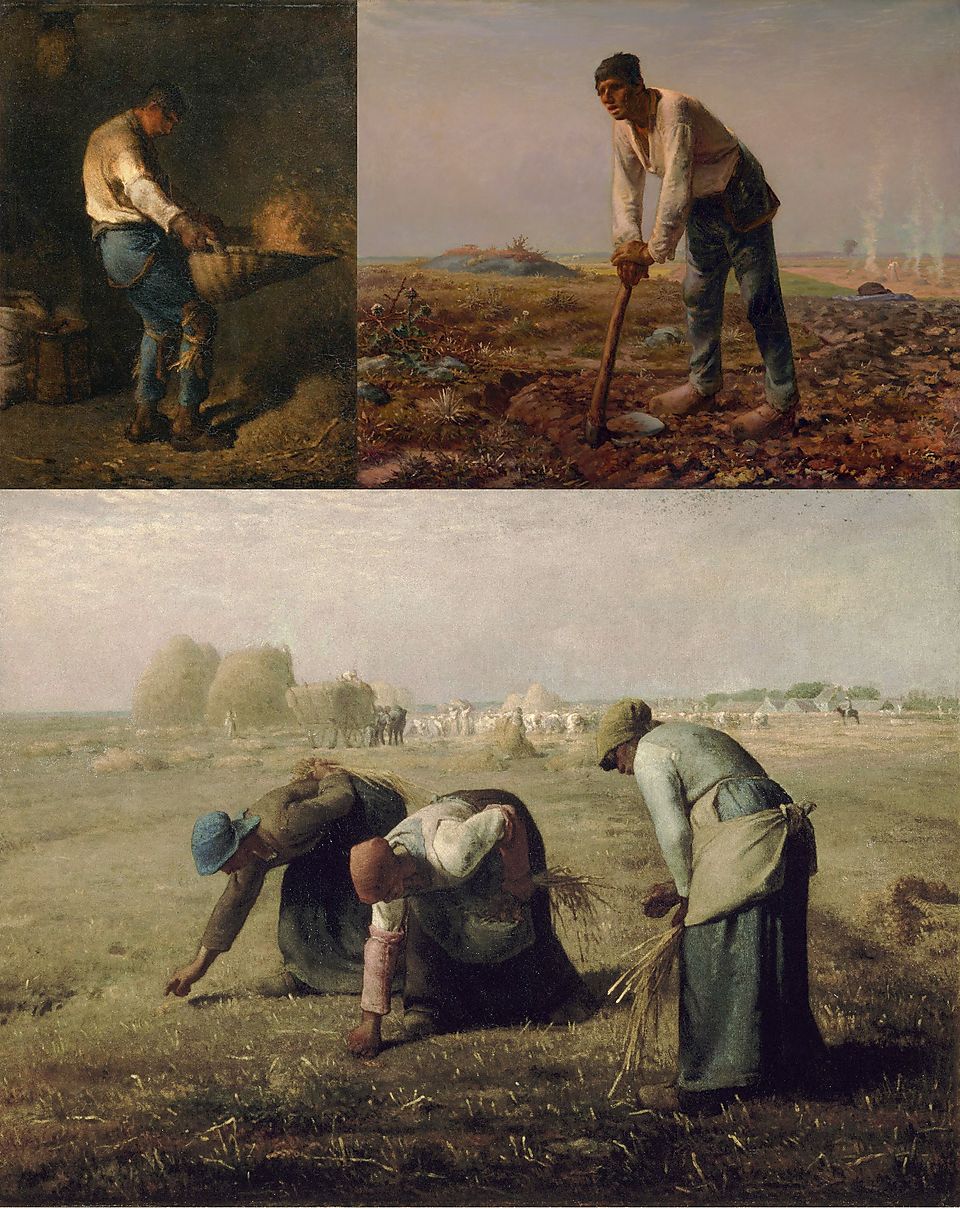
In 1848, the year of the "Communist Manifesto" and the major labour struggles, Millet exhibited a painting of a winnower at the Salon. For the first time a worker was depicted as the protagonist of the representation. However, Millet's political choice was ambiguous: why farmers and not factory workers, whose misery was even darker?
The worker is already detached from his natural environment and devoured by the system. The farmer, in contrast, is bound to the earth, to nature, to traditional ways of work and life, to the ethics and religion of the fathers, as seen in the painting “L'Angelous”. Millet expresses their hardship in “The man with the hoe” (which depicts a worker on a momentary break from the hard work of digging the earth) in a timelessly pessimistic and fatalistic picture of the laborious work and poverty of the people who cultivate the land with their bare hands.
However, in “The Gleaners", Millet's most well-known composition, there is neither a dramatic episode nor the illustration of a story. There are three figures working hard in a field that is neither beautiful nor graceful. The seemingly random layout highlights the movement and placement of the figures, giving stability to the whole composition, and making the viewer feel that the artist faced the act of harvesting as an important episode, symbolically demonstrating the workers’ toil.
In Millet’s views on life, there was generally an element of fatalism. This fatalism surfaces through his representation of the rural working classes.
The worker is already detached from his natural environment and devoured by the system. The farmer, in contrast, is bound to the earth, to nature, to traditional ways of work and life, to the ethics and religion of the fathers, as seen in the painting “L'Angelous”. Millet expresses their hardship in “The man with the hoe” (which depicts a worker on a momentary break from the hard work of digging the earth) in a timelessly pessimistic and fatalistic picture of the laborious work and poverty of the people who cultivate the land with their bare hands.
However, in “The Gleaners", Millet's most well-known composition, there is neither a dramatic episode nor the illustration of a story. There are three figures working hard in a field that is neither beautiful nor graceful. The seemingly random layout highlights the movement and placement of the figures, giving stability to the whole composition, and making the viewer feel that the artist faced the act of harvesting as an important episode, symbolically demonstrating the workers’ toil.
In Millet’s views on life, there was generally an element of fatalism. This fatalism surfaces through his representation of the rural working classes.
Do you want to learn to write like this?