
Maiyan Ceremony
The Punjabi Pre-Wedding Ritual of Maiyan and its Role in Promoting Female Importance
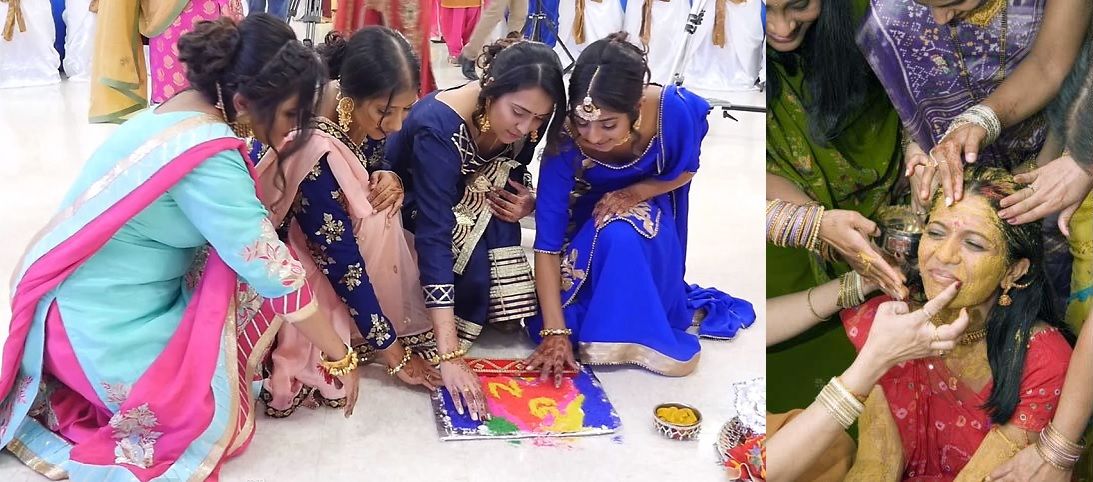
Surrounded by friends and family, the Punjabi bride and groom, each in their respective homes, take centre stage during the pre-wedding ritual of maiyan, sitting facing east on a small stool, or peeri, with rangoli, a decorative Indian folk-art form, adorning the floor by their feet. The rangoli design, usually completed by the young women of the house, is outlined in chalk and filled in using rice or flour coloured with sindoor (vermillion) and haldi (turmeric). The unique geometric and floral designs are often passed down the generations.
The ceremony contains much humour and the atmosphere is enhanced by the jovial renditions of traditional folk songs by the older women. Vatna, a mixture of flour, turmeric and oil is applied to the hands and feet of the bride or groom. The sister-in-law of the bride or groom would light-heartedly bat away the mother’s hands, as she attempts to feed a mixture of rice and sugar to her soon-to-be-married child.
Finally, the mother performs the most important ritual by stepping over the rangoli seven times, taking care not to touch it, then creating a paste from the powder, she flings it over the roof for the birds. Her actions ward off the “evil eye” (negative feelings towards the wedding parties). She then imprints her rangoli-stained hands on the front of the house, signifying a wedding is about to take place.
This rangoli-based tradition encourages female artistry and promotes female importance and the Punjabi mother uses it as her time to shine.
The ceremony contains much humour and the atmosphere is enhanced by the jovial renditions of traditional folk songs by the older women. Vatna, a mixture of flour, turmeric and oil is applied to the hands and feet of the bride or groom. The sister-in-law of the bride or groom would light-heartedly bat away the mother’s hands, as she attempts to feed a mixture of rice and sugar to her soon-to-be-married child.
Finally, the mother performs the most important ritual by stepping over the rangoli seven times, taking care not to touch it, then creating a paste from the powder, she flings it over the roof for the birds. Her actions ward off the “evil eye” (negative feelings towards the wedding parties). She then imprints her rangoli-stained hands on the front of the house, signifying a wedding is about to take place.
This rangoli-based tradition encourages female artistry and promotes female importance and the Punjabi mother uses it as her time to shine.