
A Canvas for a Tender Imagination
The Old Flame Tree of Cairo

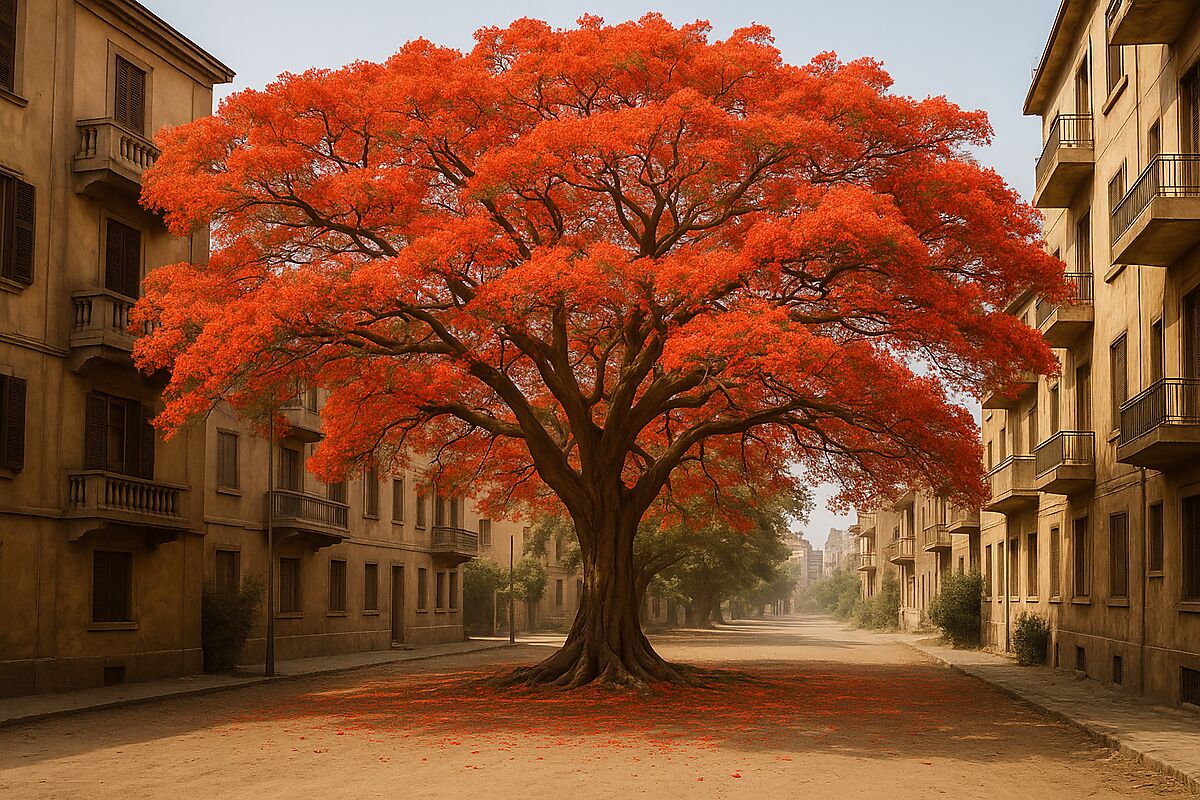
In Cairo where I lived when I was nine, I remember the dusty amber pallor of the streets amidst sporadic splashes of green. A magnificent Flame Tree lived there, its buttressed trunk burgeoning into craning branches that drifted languidly over neighbouring houses. Come spring, she bloomed glorious crimson flowers, creating a splendid dichotomy with the muted surroundings. The wind carried away the petals, spreading vivid hues in secluded corners. The tree was home to many sparrows, nightingales, hoopoes and an owl; a refuge for wildlife in a polluted city.
The vacant house with its giant tree was a fertile canvas for my tender imagination. Amidst its tangled branches, I spied flying witches, fire-breathing dragons, a phoenix laying its egg. At night, the tree spirits materialised onto their stage, a pantomime of folklore. The familiar cycle of life, leaves budding, sprouting, ageing, falling, provided comfort against turbulent changes in my life.
Years unfolded, and my neighbourhood darkened to a grimmer shade of yellow ochre as concrete began to barricade the blue sky and moonlight. Then the Arab Spring ushered in change: old houses and villas vanished to make space for sleek residential towers. The sight of green became a rarity. The flame tree bore silent witness to the cascading annihilation of nature and the architectural decline of a great city.
One day by the staircase, I overheard a neighbour say that a developer had bought the house opposite. I staggered upstairs to my third-floor flat feeling physically sick. That night, I woke to the wind rattling my window pane. I stepped out on the balcony; the flame tree’s branches lurched in the late winter wind. It was a cry for help.
‘The tree,’ I said to Rasha by the entrance next morning, pointing.
‘What’s with the tree?
‘We are going to lose it,’ I said.
‘Yes, I have heard the news.’ There was no empathy in her eyes. ‘It was always attracting bugs and owls’.
‘It’s a tree; why the fuss?’ someone else said as I tried to explain the loss of the last bastion of nature in our neighbourhood. ‘You sound like those environmental lunatics.’'
Children played football in the streets and neighbours smoked nargila on their balconies. At night, I heard a hoopoe calling from the tree’s canopy, oblivious of what was to come.
The dusty storms of khamaseen were unusually softened that spring by a light drizzle. The tree is crying, I said. My neighbours laughed.
The day they cut the tree down, I was at my grandmother’s house. The sound of the collapsing branches still echo in my ears. That day, the face of our street changed forever, into something lifeless and empty.
Now, in Kent, the Garden of England, I carry that grief and whisper my story to the listening woods. When a tree is cut down in cold blood, it leaves behind an inexplicable loss, a disquieting rage; like the loss of a human life. Like a murder.