
Cosmological Poems and Dostoevsky
The Influences of Cosmological Poems on Dostoevsky’s Masterpieces

Even if Christianity is the means through which Dostoevsky gives his characters soul and conscience, the skeleton upon which he shapes his last novels is the distinctly non-Christian mythological creation of the universe.
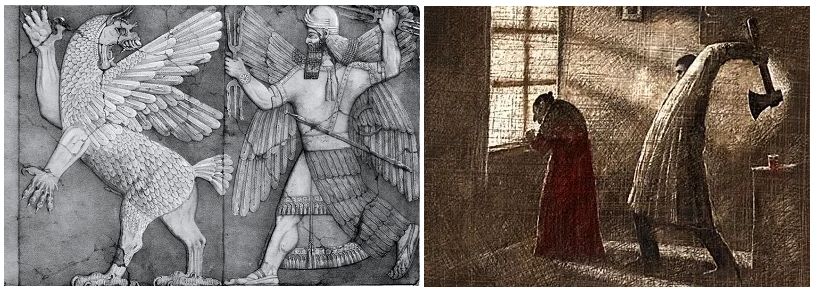
Babylonian and Assyrian beliefs about the creation of the universe, embodied in cosmological poems, concern the fight between Order (good) and Chaos (evil); and the subsequent victory of Order over Chaos, which leads to the birth of the universe, the earth and the human race.
Dostoevsky transposes this struggle to the metaphysical level: the battle between good and evil can be traced to the conflict that most Dostoevskian heroes experience within their own souls; they often find themselves fighting between peace and rebellion, conscience and morality, actions and their consequences. A prominent example of this clash is Rodion Raskolnikov, the protagonist of Crime and Punishment (1866). His unscrupulous murder of an old pawnbroker at the beginning of the novel represents the Primordial Chaos, while the tormented path to Christian redemption and his final confession of the crime is the inevitable victory of good over evil, compassion over rationality.
Like the mythological story of creation, in which Chaos is eventually defeated and humankind created through the establishment of the Supreme Order, Dostoevskian heroes tread a similar path: although they struggle between the opposing tendencies of right and wrong, they eventually undertake a path of redemptive suffering (whether it is the confession of a murder, self-exile or suicide) in order to be saved from their sins.
Babylonian and Assyrian beliefs about the creation of the universe, embodied in cosmological poems, concern the fight between Order (good) and Chaos (evil); and the subsequent victory of Order over Chaos, which leads to the birth of the universe, the earth and the human race.
Dostoevsky transposes this struggle to the metaphysical level: the battle between good and evil can be traced to the conflict that most Dostoevskian heroes experience within their own souls; they often find themselves fighting between peace and rebellion, conscience and morality, actions and their consequences. A prominent example of this clash is Rodion Raskolnikov, the protagonist of Crime and Punishment (1866). His unscrupulous murder of an old pawnbroker at the beginning of the novel represents the Primordial Chaos, while the tormented path to Christian redemption and his final confession of the crime is the inevitable victory of good over evil, compassion over rationality.
Like the mythological story of creation, in which Chaos is eventually defeated and humankind created through the establishment of the Supreme Order, Dostoevskian heroes tread a similar path: although they struggle between the opposing tendencies of right and wrong, they eventually undertake a path of redemptive suffering (whether it is the confession of a murder, self-exile or suicide) in order to be saved from their sins.