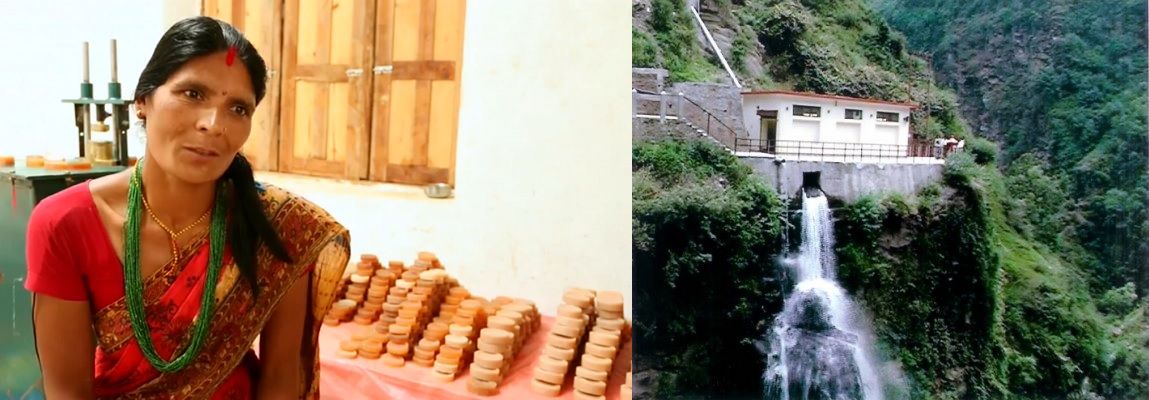
Living in the rural village of Kharbang, Nepal, Pabitra Giri could not have dreamed of running a business, one that could send supplies across the country. With its lack of basic services, such as electricity, Kharbang was a typical, impoverished village in rural Nepal. But now it is the perfect illustration of how hydroelectricity, harnessing the mountainous Nepalese landscape, has lifted many out of energy poverty.
Nepal is globally low ranking in almost every determinant of economic and social welfare, with one main exception: hydroelectric power. However, deploying electricity to remote villages via a national grid is a challenge. One solution has been to utilise the abundant natural water to locally generate electricity in these villages. These “micro-hydro” projects work by harnessing the natural flow of water to turn small turbines. In Nepal, this has driven utilisation of hydroelectric power generating capacity to 92%,1 providing electricity to nearly three-quarters of its rural population — a much higher proportion than in similar poor nations.2
Access to electricity allows for better schooling, the ability to run machinery, and better healthcare through the new-found use of x-ray machines and refrigerated medicinal storage.
Pabitra Giri used the electricity to power her herbal soap manufacturing business and to sell them nationwide, benefiting her family and the community.3 Her village now boasts a phone repair business and even an ice-cream shop. The Nepalese are working to create a more prosperous future for themselves, demonstrating, in the process, the potential for harnessing renewable energy globally.4
Micro-Projects are an important feature of world development. These are often funded by aid or charity groups such as the UNDP. The projects have the potential to revolutionise the lives of the people living in these less Economically Developed Countries or LEDCs. I wanted to draw attention to this positive story of world development and to provide an insight into life in a remote village in Nepal.