
Female Character in Children’s Literature
The Evolution of the Female Character in Children’s Literature

A work of art often accurately reflects the society at the time of its creation. Thus the portrayal of female characters in art and literature carries with it the established stereotypes of that time.
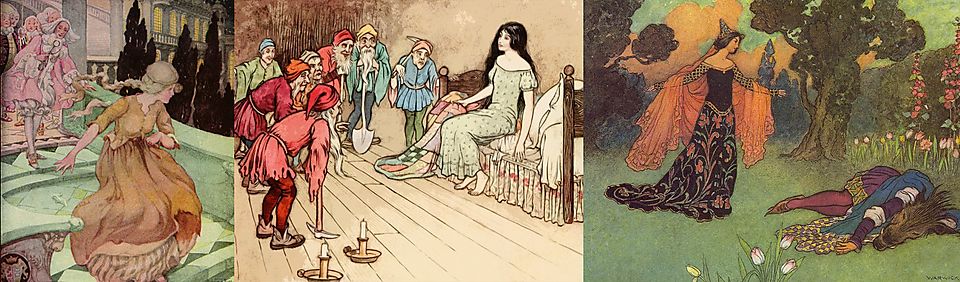
In many central works of Western literature, such as Odyssey, Divine Comedy and Faust, the female role is only that of a vehicle for advancing the plot and developing the male hero, without representing the female perspective.1 The audience learns little or nothing about female emotions and reactions to each episode of the story. In children’s literature, the male hero - often the Prince - is the one who saves the vulnerable female, as in Cinderella, Snow White or The Beauty and the Beast.2
Female characters are often divided into those that personify ultimate kindness, tracing their roots back to the Virgin Mary, and those that embody seduction and evil, hence modelled on Eve. A well-known villain in children’s literature and myth is the Evil Witch whose counterpart is the Good Fairy.3
In the 21st century, there are signs of a new narrative and changes to traditional gender stereotyping. An increasing number of female figures have leading roles and dynamic characters. This can be seen in the Walt Disney films The Princess and the Frog (2009) and Tangled (2010), as well as in adult films, such as the Daenerys Targarvyen in The Game of Thrones (2011-present), which feature positive action by women - minus the obligatory reference to the male hero.
In many central works of Western literature, such as Odyssey, Divine Comedy and Faust, the female role is only that of a vehicle for advancing the plot and developing the male hero, without representing the female perspective.1 The audience learns little or nothing about female emotions and reactions to each episode of the story. In children’s literature, the male hero - often the Prince - is the one who saves the vulnerable female, as in Cinderella, Snow White or The Beauty and the Beast.2
Female characters are often divided into those that personify ultimate kindness, tracing their roots back to the Virgin Mary, and those that embody seduction and evil, hence modelled on Eve. A well-known villain in children’s literature and myth is the Evil Witch whose counterpart is the Good Fairy.3
In the 21st century, there are signs of a new narrative and changes to traditional gender stereotyping. An increasing number of female figures have leading roles and dynamic characters. This can be seen in the Walt Disney films The Princess and the Frog (2009) and Tangled (2010), as well as in adult films, such as the Daenerys Targarvyen in The Game of Thrones (2011-present), which feature positive action by women - minus the obligatory reference to the male hero.
Do you want to learn to write like this?
References
- Ikonomidou, S. A thousand and one reversals: modernity in literature for younger ages. Patakis, Athens. 2011. 11, 76-78
- Hourihan M. Deconstructing The Hero. Rouledge. 1997. 3
- Morrell, J. Bullets, Bastards and Bitches, how to write the bad guys of fiction. F+W Publications,. 2008. 219-222