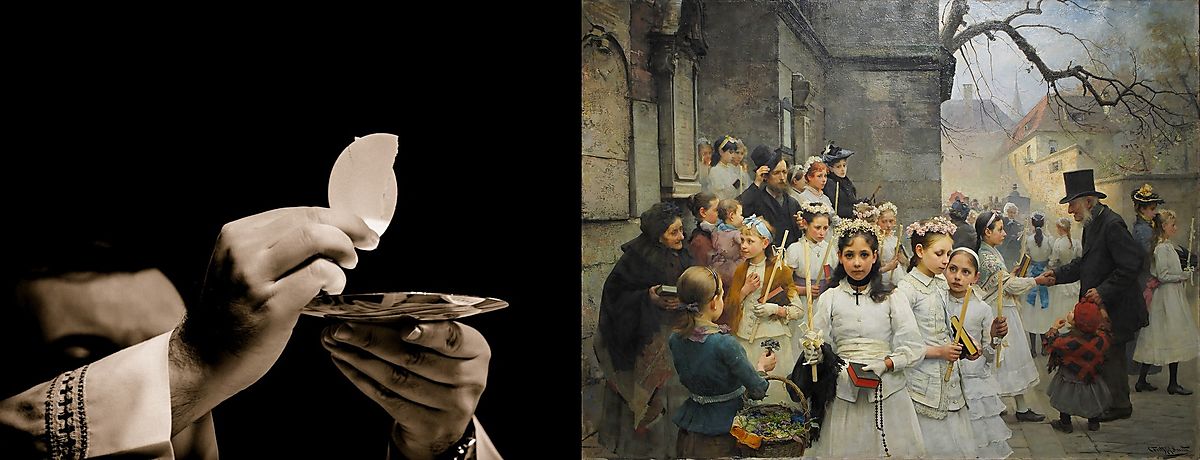
In 1577, tailors George and William Binkers of Essex, England were indicted for saying the bread and wine became the flesh and blood of Christ during Holy Communion.1 Under Elizabeth I, the Protestant reformation was gradually sweeping across the land, affecting the lives of ordinary people. This seemingly absurd litigation provides an insight into how people resisted the reformed order as new beliefs confronted the old.
Catholics believed in transubstantiation, by which the bread and wine were miraculously transformed into the body and blood of Christ during the Eucharistic rite. Protestants, however, rejected this transformation, believing it was merely symbolic of the Last Supper. The sensitively worded Elizabethan Prayer Book made both interpretations possible: “The body of our Lord Jesus Christ, which was given for thee, preserve thy body and soul unto everlasting life”.2
However, devout Catholics objected by publicly stating the Catholic interpretation (like the Binkers) or refusing to take the communion and not attending church, which were criminal offences. Tudor citizens were required to attend weekly services and receive communion at least thrice a year, with hefty fines of 12p levied against each absence.3 Puritans also disobeyed the law and preached publicly in protest at the Elizabethan service not stressing the Protestant interpretation enough.4
Nonetheless, such adverse reactions were in the minority.5 Most people attended church and received communion to obey the law, avoid fines and keep their jobs; and many found the Elizabethan Church also satisfied their spiritual needs.6 Others were wholly unaware of the nuances between the two interpretations, possibly even including George and William.7
Roger Manning. Elizabethan Recusancy Commissions. Cambridge: The Historical Journal 15, 1. 1972. 23
Andrew Pettegree. Reformation and the Culture of Persuasion. Cambridge University Press. 2005. 10-11
Jonathan Wright. Surviving the English Reformation: Commonsense, Conscience and Circumstance. Journal of Medieval and Early Modern Studies, 29. 1999. 385
Doreen Rosman. From Catholic to Protestant: Religion and the People in Tudor and Stuart England . London: Routledge. 1996. 65
Patrick Collinson (Carole Levin, Ed.). The Elizabethan Church and the New Religion. Palgrave. 2002. 173
Amy Bensley
London
The Elizabethan Church was not a happy compromise between Protestantism and Catholicism. Its theology and doctrine were distinctly Protestant and only its structure retained that of Catholic episcopacy. The Book of Common Prayer, whilst requiring adherence to its Protestant practices, allowed for nuances of belief through the ambiguous wording of its sacraments. People were expected to act uniformly but not to believe so.