
Phulkari Embroidery
The Cultural History of Phulkari and its Role in Punjabi Marital Rites
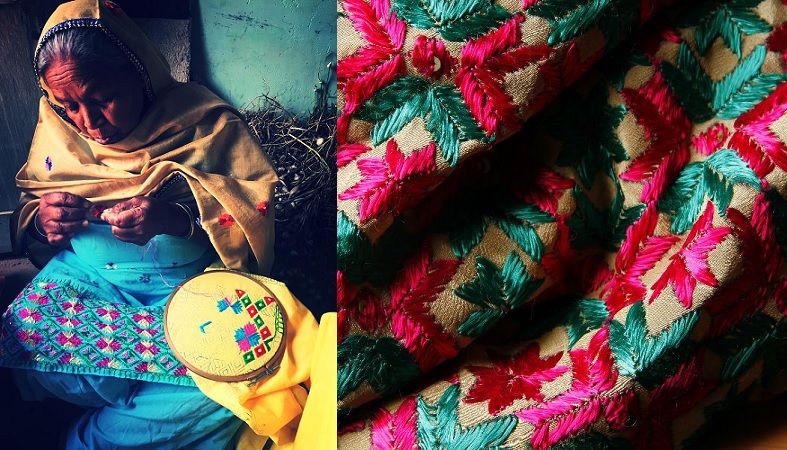
To the tune of old folk songs, a gathering of women in rural Punjab, India creatively embroider shawls, everyday clothes and gifts, sewing brightly coloured silk thread on to khaddar, a cotton-based fabric in the earthy tones of the Punjabi countryside. Young girls keenly copy their mothers’ motifs; older women embroider for future weddings. This is phulkari (phul-kari or ‘flower-craft’), a traditional Punjabi folk art, dating from the 15th to the mid-20th century, when increasing commercialisation led to its decline within rural communities, implicitly ending a practice of female bonding.
A young bride’s maternal grandmother would gift a chope (a phulkari identically embroidered on both sides of the cloth), which she had begun upon the child’s birth. Similarly, a boy’s grandmother would create a vari da bagh (bagh means ‘garden’, in reference to the dominant floral motifs) to present his future bride. During the wedding ceremony, the bagh is held above the bride by female relatives, who also shroud her upon arrival at her marital home, signifying kinship amongst the women.
Today phulkari is produced to commercial specifications, using synthetic thread and frames to aid faster production; khaddar is no longer used. These lack individuality but the attractive designs have gained international popularity due to their availability online.
Traditional baghs retained as family heirlooms are still presented as part of a trousseau, continuing the practice of phulkari as a symbol of happiness and prosperity for a married woman.1
In 2011, a Geographical Indication patent was awarded for phulkari,2 helping to preserve the heritage of this uniquely Punjabi folk art.
References
- Nalik, S.. Traditional embroideries of India. New Delhi: APH publishing corporation. 1996. p.104
- Marie-Vivien, D.. The Protection of Geographical Indications in India. New Delhl: Sage Publications India Pvt Ltd. 2015. p. 0
I wanted to highlight the historical use of phulkari embroidery in important milestones in the lives of Punjabi women. I expect the reader to gain an insight into how this folk art has a rich cultural history, underlined by its newly awarded heritage status.— Satkartar Chaggar