
FRIDA ...
The Biopic and the Influence of American Cinema

According to literary theorist Joanny Moulin, “the biopic… is a Hollywood invention steeped in American ideology, and in fact conceived as such.”1 Biopics following a “Hollywood-esque” path do not always represent accurately the lives of those whose stories they are seeking to tell.
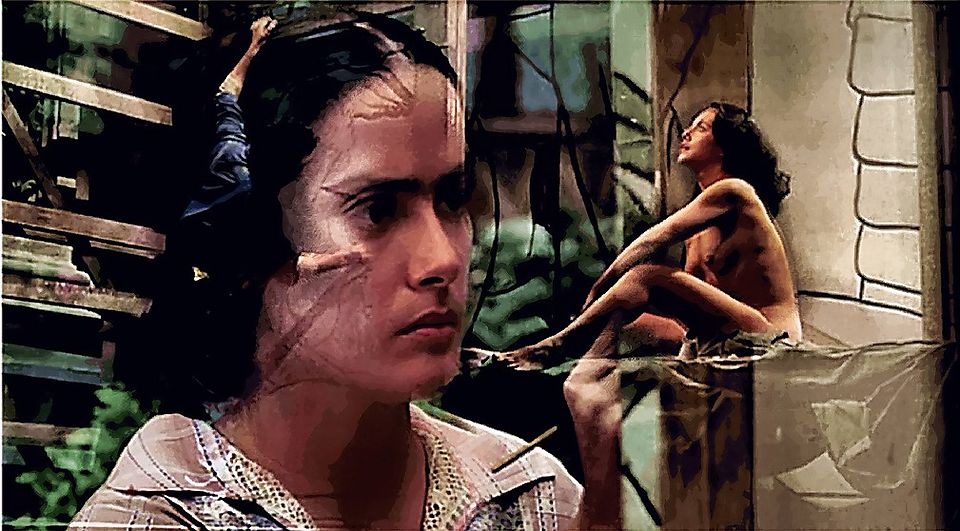
In Frida (2002), a biopic on Mexican painter Frida Kahlo, this troubled artist is defined mainly in terms of her tumultuous love affair and marriage to fellow painter Diego Rivera.
Much of Kahlo’s art is a representation of the pain she endured and provides insight into the tormented mind of the artist, to the extent that even her portraits with her husband do not seem to represent love but rather pain and insecurity.2 Kahlo herself once said “I paint myself because I am often alone. And I am the subject I know best.”3
If life, then, was to her mostly pain and isolation the biopic does her story an injustice by focusing on her sexual and love life while glossing over her suffering.
The overriding ideology of the makers of Frida is that audiences prefer themes such as love over sombre matters such as her illnesses.4 There is an underlying pressure to appeal to global audiences which leads to a particular “Orientalised anaesthetisation”5 of films, by which the audience is exposed to stereotypical notions of culture and identity as is the case in Frida. This makes it more relatable and appealing to an outside audience — even if it fails to accurately depict true life.
In Frida (2002), a biopic on Mexican painter Frida Kahlo, this troubled artist is defined mainly in terms of her tumultuous love affair and marriage to fellow painter Diego Rivera.
Much of Kahlo’s art is a representation of the pain she endured and provides insight into the tormented mind of the artist, to the extent that even her portraits with her husband do not seem to represent love but rather pain and insecurity.2 Kahlo herself once said “I paint myself because I am often alone. And I am the subject I know best.”3
If life, then, was to her mostly pain and isolation the biopic does her story an injustice by focusing on her sexual and love life while glossing over her suffering.
The overriding ideology of the makers of Frida is that audiences prefer themes such as love over sombre matters such as her illnesses.4 There is an underlying pressure to appeal to global audiences which leads to a particular “Orientalised anaesthetisation”5 of films, by which the audience is exposed to stereotypical notions of culture and identity as is the case in Frida. This makes it more relatable and appealing to an outside audience — even if it fails to accurately depict true life.
Do you want to learn to write like this?
References
- Moulin, J. . Biophoty: The Biofilm in Biography Theory. 2016. 1-2
- FridaKahlo.org. Frida Kahlo Paintings, Biography, Quotes
- FridaKahlo.org. Self-portrait with Monkey, 1938 by Frida Kahlo
- Saha, A.. Race and the Cultural Industries. 2018. 103-4
- Molina-Guzmán, I.. Mediating Frida: Negotiating Discourses of Latina/o Authenticity in Global Media Representations of Ethnic Identity. 2006. 241