
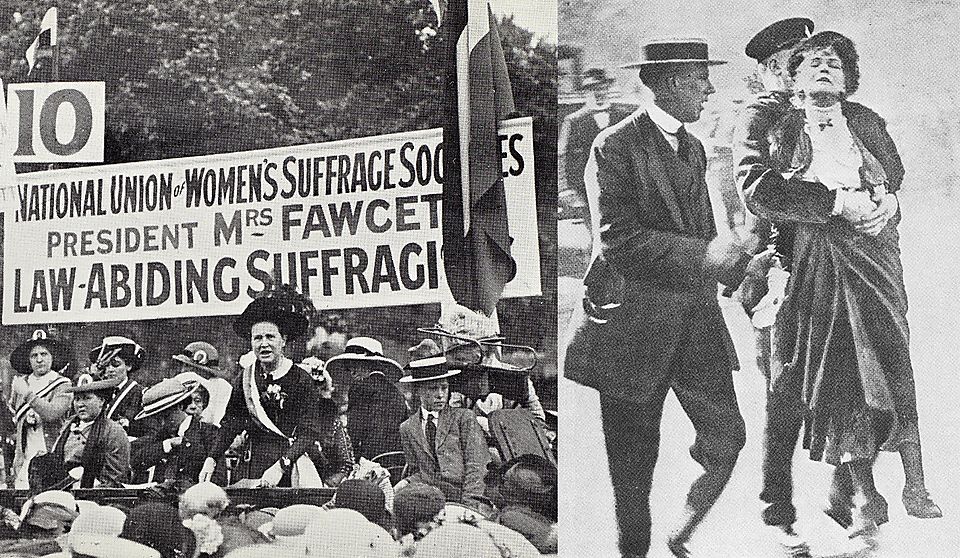
Law-abiding Suffragists vs the Suffragettes
Suffragette and the Reclamation of Slurs

When the Daily Mail coined the term ‘suffragette’ in 1906, their intention was to ridicule women fighting for the right to vote.
They created ‘suffragette’ by applying ‘-ette’ to the original ‘suffragist’, a more universal term which can also apply to men. The ‘-ette’ suffix derives from French and suggests something as diminutive, inferior or inherently feminine. Primarily, it denotes imitation — and here the suffragette was the hysterical counterpart to the noble, genteel suffragist.
However, in doing so, the Daily Mail had created a word with strong connotations of direct action and disruption — something which the WSPU seized upon by taking ownership of the term. Led by Emmeline Pankhurst, the WSPU was one of the two main groups of the women’s suffrage movement. They named their journal, ‘The Suffragette’, proclaiming that
Reclamation of slurs is a common political tool — the intent being to remove a word’s capacity for damage by subverting its pejorative power. Words such as ‘bitch’, ‘nigger’ and ‘queer’ have all been reclaimed by the groups that they seek to oppress.
The militancy of the suffragettes, in comparison to other law-abiding suffrage organisations, initially raised negative perceptions of the movement and so suffragette remained a denigrated term. However, over time the term lost its derogatory status, and the suffragettes are now commonly thought of as wholly responsible for the Equal Franchise Act of 1928.
They created ‘suffragette’ by applying ‘-ette’ to the original ‘suffragist’, a more universal term which can also apply to men. The ‘-ette’ suffix derives from French and suggests something as diminutive, inferior or inherently feminine. Primarily, it denotes imitation — and here the suffragette was the hysterical counterpart to the noble, genteel suffragist.
However, in doing so, the Daily Mail had created a word with strong connotations of direct action and disruption — something which the WSPU seized upon by taking ownership of the term. Led by Emmeline Pankhurst, the WSPU was one of the two main groups of the women’s suffrage movement. They named their journal, ‘The Suffragette’, proclaiming that
...the ‘Suffragist’ jist [sic] wants the vote, while the Suffragette means to get it.
Reclamation of slurs is a common political tool — the intent being to remove a word’s capacity for damage by subverting its pejorative power. Words such as ‘bitch’, ‘nigger’ and ‘queer’ have all been reclaimed by the groups that they seek to oppress.
The militancy of the suffragettes, in comparison to other law-abiding suffrage organisations, initially raised negative perceptions of the movement and so suffragette remained a denigrated term. However, over time the term lost its derogatory status, and the suffragettes are now commonly thought of as wholly responsible for the Equal Franchise Act of 1928.