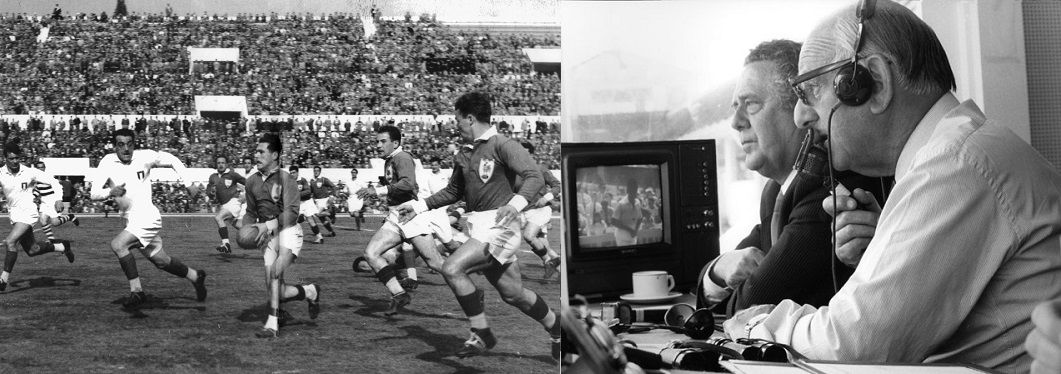
On 15 January 1927, Teddy Wakelam sat in a wooden box at the England v Wales rugby match at Twickenham, England. An imaginary grid of the pitch had been published in the Radio Times, and the active location was read out as Wakelam provided a running commentary. This was the first radio broadcast of a live sporting event in Britain.1 2
A week later, Wakelam was active in the first football commentary, as Arsenal drew 1-1 with Sheffield United at Highbury. Commentaries for cricket, the Grand National and the Varsity Boat Race would follow later that year.
The grid references were later removed when it became apparent that the interruptions were not necessary. Behind this change was Seymour Joly de Lotbiniere (“Lobby”), a director at the BBC from 1935-52. Lobby’s vision was for the commentator to research teams and inform on the potential impact of the result, in addition to assessing key moments in the game and explaining stadium effects — providing structure, context and excitement: essentially giving listeners front row seats.3 4
Although not everyone owned a radio, communal gatherings of fans brought people together for the biggest sporting events. During the 1927 FA Cup final, thousands of Cardiff supporters piled into the city centre to enjoy the action from loudspeakers.5 Letters from the blind and infirm began to reach the BBC with thanks for providing commentary.6
Over the years, radio commentary has provided British sports fans with moments of collective euphoria; Ian Robertson’s grainy voice could be heard as England’s Jonny Wilkinson kicked the winning points in the dying seconds of the 2003 Rugby World Cup: “It’s up! It’s over! He’s done it!”7
I am a regular listener to a range of sports via radio and enjoy the live radio commentary. I have listened to such coverage since I was young and this form of broadcasting has provided me with many fond memories, as I'm sure it has for many other sports fans. I want the reader to understand the importance of the first broadcast, the England v Wales rugby match in 1927.