
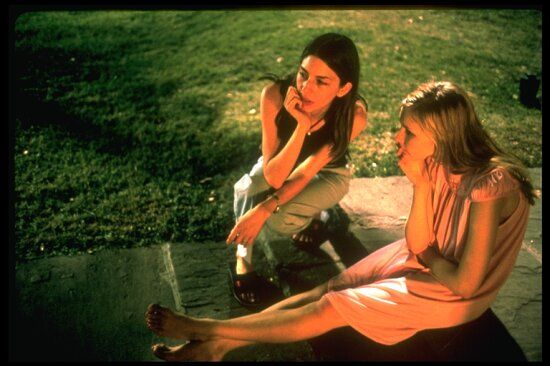
Sofia Coppola and Kirsten Dunst on the set of The Virgin Suicides
Sofia Coppola’s Cinema: Juxtaposing Feminine Style with Feminist Reality

Juxtaposition is an effective tool in many art forms as it allows the artist to express an important message in a subtle way. Sofia Coppola uses her soft “feminine” cinematic style in order to shed light on the dark themes that she explores in her films. As a female director, Coppola is often at risk of being dismissed as superficial because she utilises overtly feminine traits in her films. But close inspection of the underlying message in Coppola’s work reveals that in her work “style is substance”1.
Coppola’s “aesthetics of girlhood”2 are exactly what makes her relevant in a feminist context. Films such as The Virgin Suicides (1999) and Marie Antionette (2006) focus on female subjectivity and expression, with special emphasis on the struggles that young women experience because of the way society views them. It is precisely Coppola’s soft aesthetic contrasted with the dark themes of her work that make her message so effective.
The director has mastered the art of reclaiming feminine aesthetics in order to send a feminist message about the very dark reality that is often concealed by those very aesthetics. By contrasting her serious storylines with pink rooms and frilly dresses, Coppola exposes the hardships and pressures that young girls experience in their adolescence. Where pastel coloured fantasies and dark traumatic realities collide, that is where Coppola’s films speak her feminist truth.
Coppola’s “aesthetics of girlhood”2 are exactly what makes her relevant in a feminist context. Films such as The Virgin Suicides (1999) and Marie Antionette (2006) focus on female subjectivity and expression, with special emphasis on the struggles that young women experience because of the way society views them. It is precisely Coppola’s soft aesthetic contrasted with the dark themes of her work that make her message so effective.
The director has mastered the art of reclaiming feminine aesthetics in order to send a feminist message about the very dark reality that is often concealed by those very aesthetics. By contrasting her serious storylines with pink rooms and frilly dresses, Coppola exposes the hardships and pressures that young girls experience in their adolescence. Where pastel coloured fantasies and dark traumatic realities collide, that is where Coppola’s films speak her feminist truth.