
Oscar Niemeyer: Sensuality in Architecture
Oscar Niemeyer: Sensuality in Architecture

I am not attracted to straight angles or to the straight line, hard and inflexible, created by man. I am attracted to free-flowing, sensual curves.1
Credited with helping to reshape the national identity of Brazil, Oscar Niemeyer was obsessed with abstract forms and curves in buildings. Niemeyer developed a distinct visual style, adding a new, creative flair to modernism.
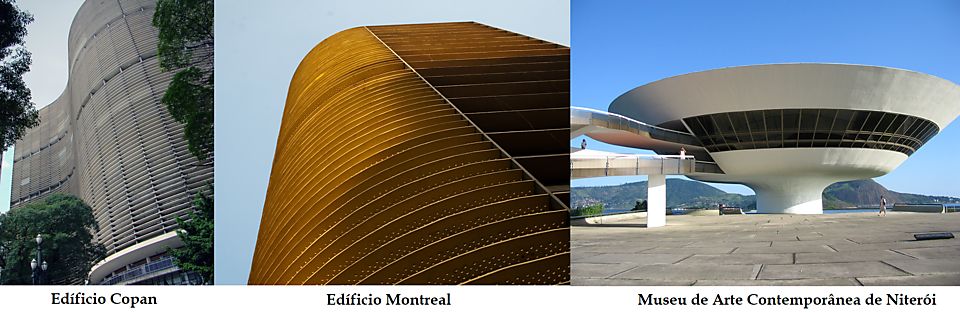
The curves in Niemeyer’s buildings were possible attempts to show his appreciation for the female form. He once said, “form follows beauty, or even better, form follows feminine.”2 Edíficio Copan (1951), for example, is a swerving structure with a sinuous façade. One of the largest buildings in Brazil, its giant wave stands out among the surrounding linear structures.
Edíficio Montreal (1954) in Sao Paulo is a rounded structure, located opposite the Poupatempo Luz (government office). Niemeyer uses total fluidity with his design. Its shape shifts in perspective depending from which side the building is viewed.
Niemeyer created many other spectacular buildings, including Museu de Arte Contemporânea de Niterói (1966). This saucer-shaped structure is elegant, curvy and aesthetically simple. The museum has a truly unique appearance and the building is one of Niteroi’s main landmarks.
Oscar Niemeyer was a modernist pioneer. He always showed a devotion to abstract forms and never designed a building that did not demonstrate his signature aesthetic. Above all, Niemeyer was the king of the curve.