
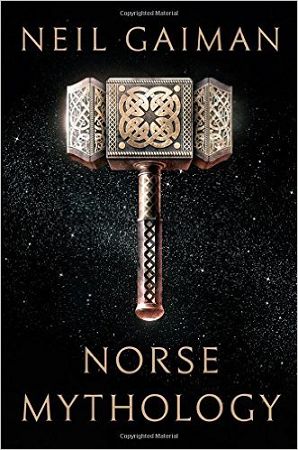
Book cover of Norse Mythology
Norse Mythology (2017) by Neil Gaiman

Imagine yourself sitting around a campfire, listening to a storyteller on a warm summer’s evening, captivated by tales of Norse Gods and giants as if you were actually present, watching the stories unfold before you. Neil Gaiman has the remarkable ability to transport the reader both into the legends as they unfold, as well as into a time many centuries later where their stories are being retold. His retellings of first the formation of the earth (Midgard), of battle and bloodshed, of scheming and trickery, using the mythological and poetic language of the Prose Edda and Poetic Edda, is enthralling.
The stories, thoughtfully extracted from the 13th century Edda, provide insight into how the Norse Gods’ actions are similar to mankind’s own, often spontaneous, causing unintended consequences. According to the legends, their actions physically shaped the world in which we live today. The Norse Gods provide an amusing alternative to the religious perception of God, as their plans often go awry: they are not faultless entities.
Deceit, sacrifice and greed are common themes, but whether or not they lead mankind to Ragnarok – the final battle and the end of this era of Norse History – we will have to wait and see.
The stories, thoughtfully extracted from the 13th century Edda, provide insight into how the Norse Gods’ actions are similar to mankind’s own, often spontaneous, causing unintended consequences. According to the legends, their actions physically shaped the world in which we live today. The Norse Gods provide an amusing alternative to the religious perception of God, as their plans often go awry: they are not faultless entities.
Deceit, sacrifice and greed are common themes, but whether or not they lead mankind to Ragnarok – the final battle and the end of this era of Norse History – we will have to wait and see.