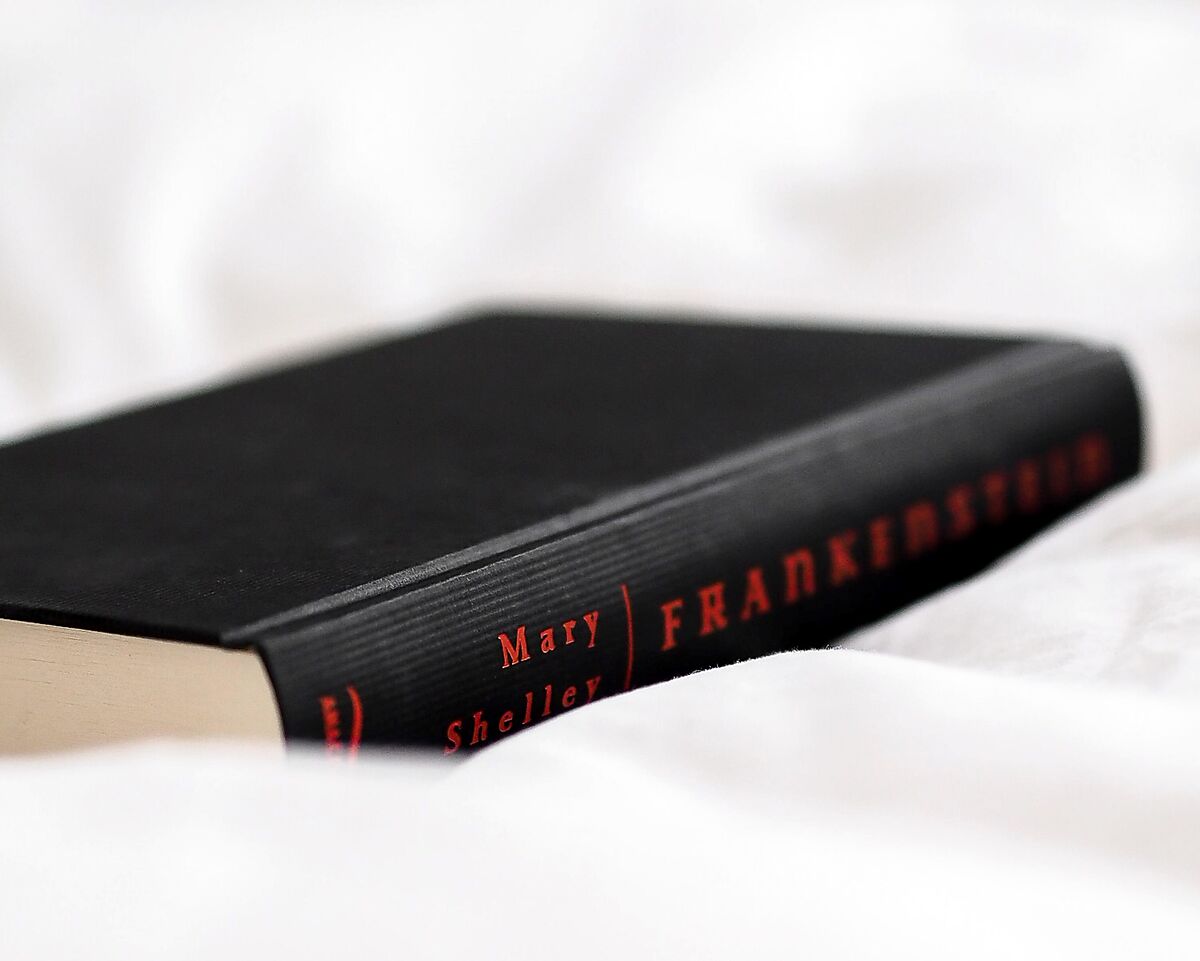
In the summer of 1816, in a villa by Lake Geneva, the celebrated poet Lord Byron suggested a ghost-writing competition during a thunderstorm.1 Byron’s companions included his physician John Polidori, fellow poet Percy Shelley and Shelley’s lover Mary. While Byron and Polidori could only imagine vampires, Mary Shelley created a gruesomely novel monster: a creature made of assembled body parts, torn from corpses and stolen from graves, brought to life by its human creator, Victor Frankenstein.
In the pursuit of scientific greatness, Frankenstein builds a creature that can think and act independently, but he rejects his own creation because of its grotesque appearance. It is Victor Frankenstein’s revulsion that causes his creature to turn against him: the creature only becomes a monster after being shunned by society. Shelley ensures that readers recognise the irony of Frankenstein’s plight, as his creation becomes intent on destruction.
Frankenstein has become synonymous with his creature, a testament to Shelley’s influence in changing perceptions of the ‘monstrous’ from mythical to man-made. In Greek mythology, the demigod Prometheus steals fire from the gods to give to humans for which he is soundly punished. Seeing the parallels to her story, Shelley later added the subtitle ‘Modern Prometheus’ as a warning to the reader.2 Thanks to Shelley, the notion of ‘playing with fire’ continues to be a persistent theme in science fiction, particularly in the pursuit of creating a trans-human, a being that could overcome human vulnerabilities, such as age and illness.
Byron’s whim of a writing competition had more significance than he could have imagined. Polidori’s The Vampyre (1819) has been parodied many times, but it is Frankenstein (1818) that has endured.
Seed, David. A Companion to Science Fiction. Blackwell Publishing. 2005. 456
Weiner, Jesse et al. Frankenstein and Its Classics: The Modern Prometheus from Antiquity to Science Fiction. Bloomsbury Academic. 2018. 44-45
Anna Phillips
London, UK
I read John Polidori’s ‘The Vampyre’ while researching Gothic fiction and was surprised to learn of Polidori’s connection to Mary Shelley, who wrote her most famous work, ‘Frankenstein,’ in the same period. Figures of the vampire and Frankenstein remain prevalent in popular culture, but the influence and legacies of the original are markedly different.