
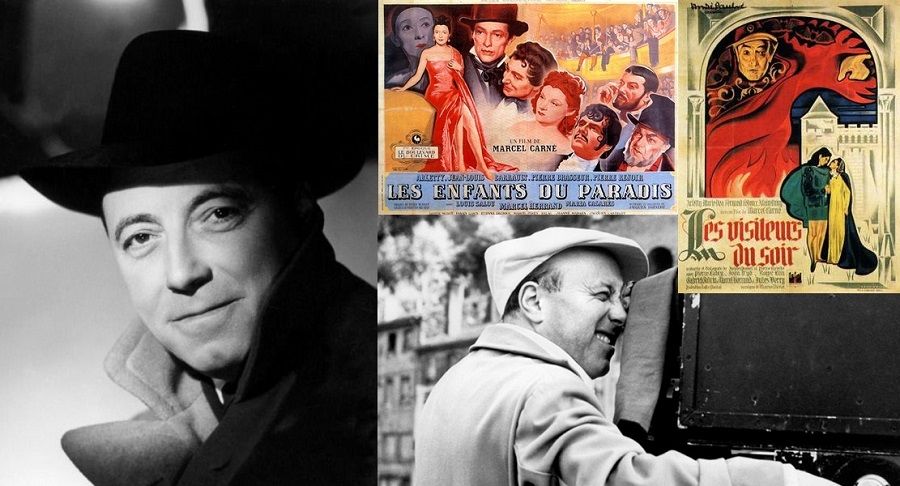
Marcel Carné Collage
Marcel Carné and the Second World War

Marcel Carné made his most lauded films during World War II, in the Vichy zone of France, despite censorship and persecution. Although administering the ‘free zone’ of France from 1940, the fascist Vichy government was hostile to freedom of speech and expression. Consequently, Carné faced severe impediments to completing his work.
Yet, Carné’s releases in this period were some of his most successful, with only Les Tricheurs, 1958, being comparably popular. How was this possible? Why did Carné’s films thrive in war and founder in peace? The answer is complex, but almost certainly comes down to Carné’s sombre directorial choices which, once the war ended, no longer engaged audiences.
Themes of loss, despair, and missed opportunity imbue his work with melancholic tones and a sense that there are no simple resolutions to complex human interactions. Farce, pantomime, and passion in Les Enfants du paradis, 1945, makes for rich and full characters, yet the ending leaves the audience entirely without closure. A fantastical setting in Les Visiteurs du Soir, 1942, allows Carné to evade the censors whilst still presenting an apparent allegory of occupied France featuring the devil arriving to destroy happiness.
Clearly Carné was at his best when his work echoed the spirit of the time, but this was an unconscious reflection of society, rather than a conscious dissection of its flaws.
Yet, Carné’s releases in this period were some of his most successful, with only Les Tricheurs, 1958, being comparably popular. How was this possible? Why did Carné’s films thrive in war and founder in peace? The answer is complex, but almost certainly comes down to Carné’s sombre directorial choices which, once the war ended, no longer engaged audiences.
Themes of loss, despair, and missed opportunity imbue his work with melancholic tones and a sense that there are no simple resolutions to complex human interactions. Farce, pantomime, and passion in Les Enfants du paradis, 1945, makes for rich and full characters, yet the ending leaves the audience entirely without closure. A fantastical setting in Les Visiteurs du Soir, 1942, allows Carné to evade the censors whilst still presenting an apparent allegory of occupied France featuring the devil arriving to destroy happiness.
Clearly Carné was at his best when his work echoed the spirit of the time, but this was an unconscious reflection of society, rather than a conscious dissection of its flaws.