
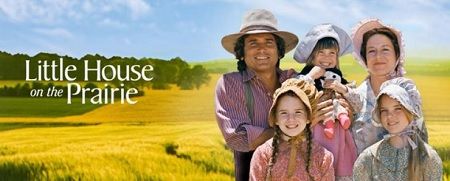
Promotion poster for Little House on the Prairie
Little House on the Prairie: The Story behind the Innocent Lives

The Little House on the Prairie (1974-83), an American TV series about a family living on a farm in Minnesota in the 1870s, was popular with a world-wide audience. The innocence of the emblematic characters related to a purist’s version of the American dream. However, as behind many a myth, a dark tale lurked.
The inspiration for the famous series was Laura Ingalls Wilder's autobiography. By 1930, Wilder had been trying to publish the book in America for several years without success. She then rewrote her hardback into eight small children's books, which became the basis for transferring the lives of the Ingalls family to the screen.
Real life, however, was not as innocent as the stories. In 2014 her original autobiography was published, without censorship (since the loyal viewers of the TV series were now all adults), under the title Pioneer Girl1. In her book, Wilder describes episodes of family violence, love triangles and alcohol-riddled situations gone out of control. The readers of the autobiography can better understand the everyday lives of the Ingalls family, the relationships between its members, the erotic scandals, all against the backdrop of adversity in the American West; Charles Ingalls, the father figure, for instance, is portrayed as a bounty hunter, never paying rent, moving his family on in the night to avoid detection.
The series continues to air till the present day, with many fans of all ages, in spite of the darkness lurking behind the innocence projected on screen.
The inspiration for the famous series was Laura Ingalls Wilder's autobiography. By 1930, Wilder had been trying to publish the book in America for several years without success. She then rewrote her hardback into eight small children's books, which became the basis for transferring the lives of the Ingalls family to the screen.
Real life, however, was not as innocent as the stories. In 2014 her original autobiography was published, without censorship (since the loyal viewers of the TV series were now all adults), under the title Pioneer Girl1. In her book, Wilder describes episodes of family violence, love triangles and alcohol-riddled situations gone out of control. The readers of the autobiography can better understand the everyday lives of the Ingalls family, the relationships between its members, the erotic scandals, all against the backdrop of adversity in the American West; Charles Ingalls, the father figure, for instance, is portrayed as a bounty hunter, never paying rent, moving his family on in the night to avoid detection.
The series continues to air till the present day, with many fans of all ages, in spite of the darkness lurking behind the innocence projected on screen.
Do you want to learn to write like this?
References
- Wilder., L. I., Hill, P. S.,. Pioneer Girl: The Annotated Autobiography. South Dakota Historical Society Press. 2014
- www.mixanitouxronou.gr. The true story behind televisions "Little house on the Prairie". 2015-12-27