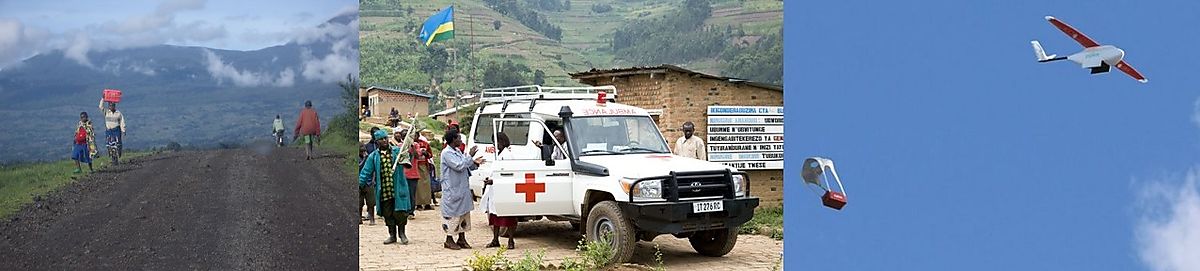
Abdoul Nizeyimana is a 27-year-old medical drone operator, based in rural Rwanda, just west of its capital Kigali.1 He works for Zipline, a Californian startup, in their first distribution centre, leading a team delivering life-saving blood supplies to the country’s remote hospitals by drone. He is one of Ziplines first local hires and part of a team that is almost all Rwandan.
Rwanda made headlines in October 2016, when President Paul Kagame and the Rwandan Ministry of Health took a gamble on the commercialisation of drones, becoming the first country in the world to introduce the technology into its healthcare system.2 Rwanda is one of the world’s poorest countries3 and suffers from weak infrastructure, compounded by a mountainous terrain. During the rainy season, the hilly western and northern regions are prone to landslides and flooding.4 With transportation taking 4-5 hours by dirt road, it is challenging for doctors in Rwanda’s regional hospitals to obtain blood for vital emergency operations.5
Local operators like Abdoul dispatch up to 500 deliveries of medicine and blood supplies per day to hospitals in Rwanda’s western region — cutting journey times to around 45 minutes. They launch the drone from a small patch of land; the drone flies autonomously to the hospital, parachuting its cargo for staff to collect before returning to base.
For Abdoul, the greatest benefit of his job is in making a real difference to his country. On a personal level, Abdoul has been able to buy his grandmother a house, providing her with a better quality of life.6 His story offers a glimpse into the positive contribution drone technology is making to people’s lives in Rwanda.
While Western countries often take the spotlight when it comes to utilising advanced technology, the application of medical delivery drones in East Africa is turning that idea on its head. I want the reader to understand how the application of drones is improving lives in developing countries by revolutionising healthcare and providing jobs for locals, using Zipline in Rwanda as a case study.