
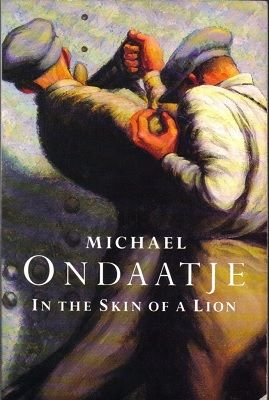
Front Cover of In the Skin of a Lion
In the Skin of a Lion (1987) by Michael Ondaatje

Canadian author Michael Ondaatje’s In the Skin of a Lion (1987) is the often-overlooked prequel to his celebrated masterpiece The English Patient (1992). Ondaatje’s novel set in early 20th century Toronto combines art and history to impart a key message: there are two sides to history: the official and everything else.
The narrative follows Patrick Lewis, a rural farmhand, as he migrates to Toronto in search of a better life. Through his love affairs, friendships and manual labour jobs, the reader is immersed into the industrial hub of Toronto as the city undergoes rapid urbanisation. Like Patrick, converging on the city are a variety of other characters, from the surreal outlaw Caravaggio to the heroic Nicholas Temelcoff, and the socialist firebrand Alice, who lies at the heart of the novel’s passionate love triangle.
Writing from a truly postmodern perspective, Ondaatje rejects the grand historical narrative in favour of shining a light on the many hidden stories that escape official historical accounts. The mundane poverty and blue collar labour of Toronto are given precedence so that demolition workers become intricate craftsmen, tannery men artists and scaffolders akin to trapeze artists.
In In the Skin of a Lion Ondaatje writes “Trust me, this will take time but there is order here, very faint, very human.” This in itself is a perfect summary for a beautiful book and reminds us that history does not have to be an account of the victor but a portrait of all those who were there.
The narrative follows Patrick Lewis, a rural farmhand, as he migrates to Toronto in search of a better life. Through his love affairs, friendships and manual labour jobs, the reader is immersed into the industrial hub of Toronto as the city undergoes rapid urbanisation. Like Patrick, converging on the city are a variety of other characters, from the surreal outlaw Caravaggio to the heroic Nicholas Temelcoff, and the socialist firebrand Alice, who lies at the heart of the novel’s passionate love triangle.
Writing from a truly postmodern perspective, Ondaatje rejects the grand historical narrative in favour of shining a light on the many hidden stories that escape official historical accounts. The mundane poverty and blue collar labour of Toronto are given precedence so that demolition workers become intricate craftsmen, tannery men artists and scaffolders akin to trapeze artists.
In In the Skin of a Lion Ondaatje writes “Trust me, this will take time but there is order here, very faint, very human.” This in itself is a perfect summary for a beautiful book and reminds us that history does not have to be an account of the victor but a portrait of all those who were there.