The Hitler Youth and its counterpart for children, the Jungvolk, prepared boys aged 10 to 18 to be part of the Nazi war machine. Speaking of the youth of Germany in 1933, Hitler declared ‘Look at these young men and boys! What material! With them I can make a new world.’1 But for children, the appeal of Nazi youth groups was far removed from politics; it provided a sense of belonging ‘free from parental supervision, filled with “duties” that seemed sheer pleasure...hiking, camping, war games in the field’.2 The summer camps gave poor children a chance to go on holiday and enjoy the countryside in a social environment.
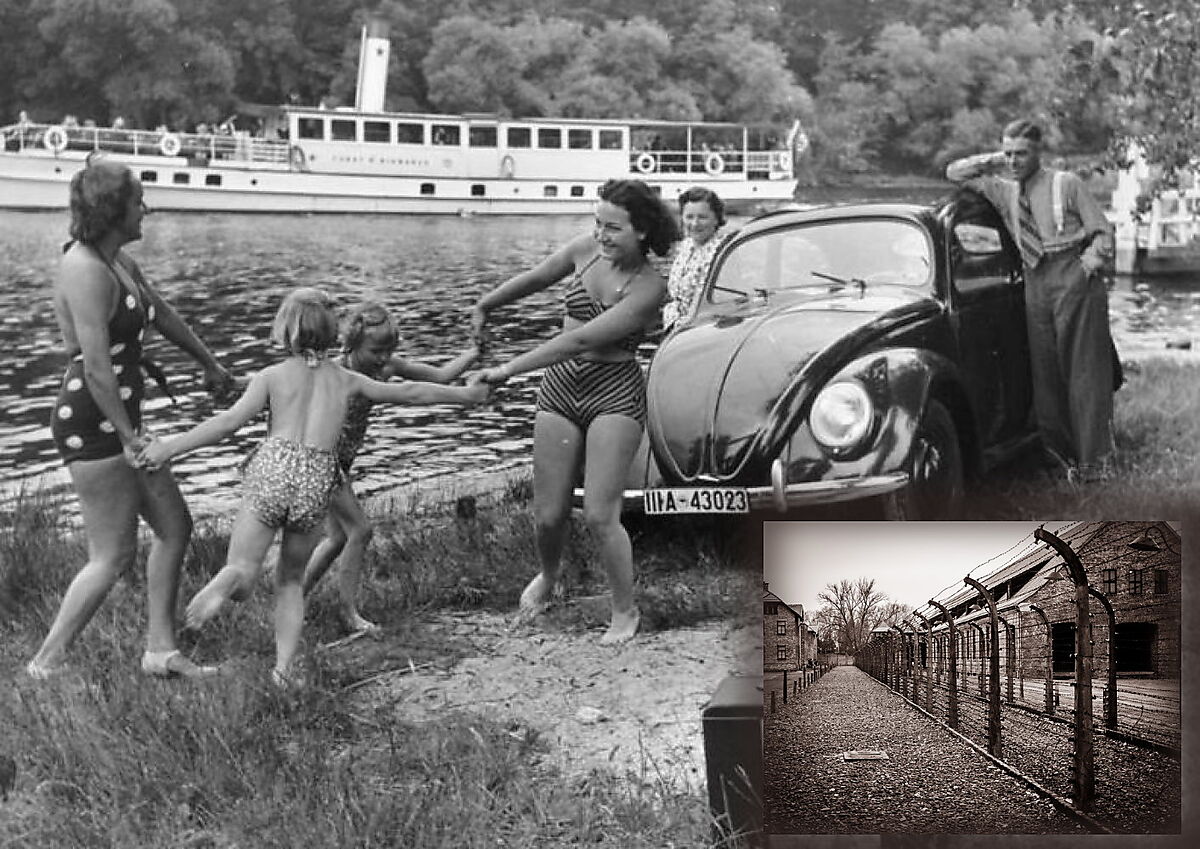
In 1933, the national German labour organisation introduced Kraft Durch Freude (Strength Through Joy), a scheme to ‘reconnect the spheres of work and free time’3 through cultural activities. Working-class people were offered perks like free museum and theatre tickets, and discounted day trips. A few years later, the organisation went further and announced a scheme whereby Germans could own a Volkswagen car after paying for it in instalments. The ‘car for every German’ scheme was hugely popular, causing the ‘grey German everyday’ to be forgotten amidst the promise of a brighter future.4
In the postwar world, a critical question is how a regime that went on to murder millions of people managed to take root with little resistance from the German public. There are many possible answers to this question. However, the story of how the Third Reich operated at the grassroots level paints a picture of everyday life for the average German, and how that may have influenced the initial acceptance and spread of the regime.
Gerhard Rempel. Hitler’s Children. Chapel Hill: The University of North Carolina Press. 1989. 2
Alfons Heck. A Child of Hitler. Phoenix: Renaissance House. 2001. 9
Shelley Baranowski. Strength Through Joy: Consumerism and Mass Tourism in the Third Reich. New York: Cambridge University Press. 2007. 40
Richard J. Evans. The Third Reich in Power 1933-1939: How the Nazis Won Over the Hearts and Minds of a Nation; Chap. 4. Penguin. 2012
Isabella Barber
Manchester
Like many people, I’m fascinated by the complexities of how the Nazi regime thrived in Germany with little resistance. In my final year of university I was directed to look at history from the bottom up, rather than the top down, and this was a revolutionary way for me to study how National Socialism on a local level could influence the acceptance and ultimate success of the regime.