
Golden Twenties
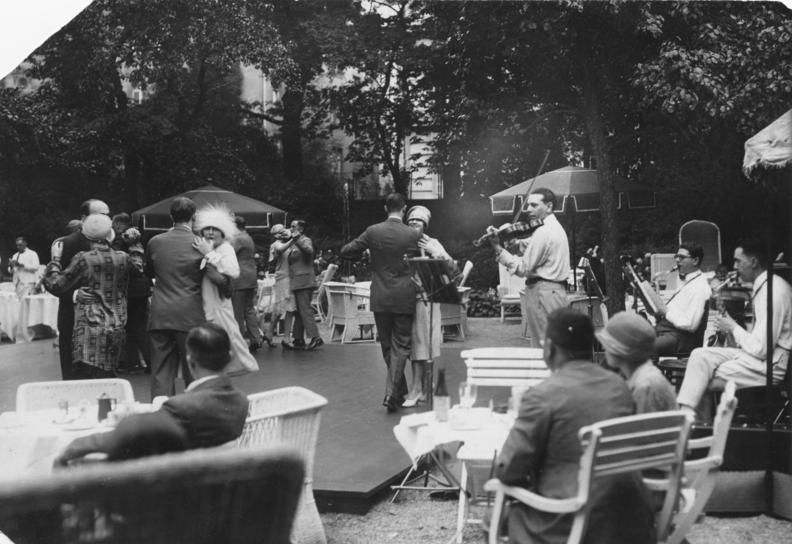
Tea dance in the garden of the Esplanade hotel, Berlin 1926
The Golden Twenties is the decade of the 1920s in Germany. The era began with the end of World War I and ended with the Wall Street Crash of 1929.
The German term (Goldene Zwanziger) is often applied to that country's experience of healthy economic growth, expansion of liberal values in society, and spurt in experimental and creative efforts in the field of art.
Before this period, the Weimar Republic had experienced record-breaking levels of inflation of one trillion percent between January 1919 and November 1923. It was only after radical economic reform measures initiated by the Weimar Republic, such as introduction of a new currency, the Rentenmark, that an environment of economic stability and prosperity flourished in Germany.
In the United States, the period was called the Roaring Twenties; and in France, it was known as Les Années folles.
The German term (Goldene Zwanziger) is often applied to that country's experience of healthy economic growth, expansion of liberal values in society, and spurt in experimental and creative efforts in the field of art.
Before this period, the Weimar Republic had experienced record-breaking levels of inflation of one trillion percent between January 1919 and November 1923. It was only after radical economic reform measures initiated by the Weimar Republic, such as introduction of a new currency, the Rentenmark, that an environment of economic stability and prosperity flourished in Germany.
In the United States, the period was called the Roaring Twenties; and in France, it was known as Les Années folles.
Golden Twenties adapted from Wikipedia and licensed by The Cultural Me under CC BY SA 3.0