
Economy of Rwanda
Economy of Rwanda
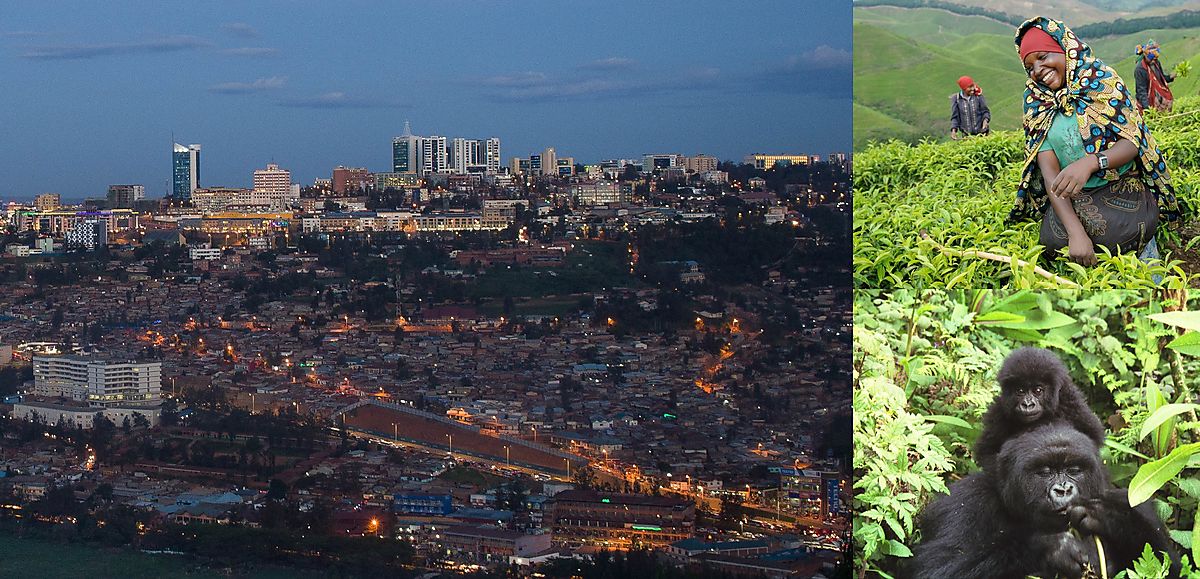
Rwanda is a country of few natural resources, and the economy is based mostly on subsistence agriculture by local farmers using simple tools. In 2012 agriculture accounted for 33% of the economy, with coffee and tea the major exports. The high altitudes, steep slopes and volcanic soils provide favourable conditions. Export markets include China, Germany, and the United States.
The industrial sector in Rwanda is small, contributing 16% of GDP in 2012.
The country entered a high period of economic growth in 2006, and the following year managed to register 8% economic growth, a record it has sustained since, turning it into one of the fastest-growing economies in Africa. This sustained economic growth reduced the percentage of the country's population living in poverty from 57% to 45%. However, the Rwandan government's methodology in calculating GDP has been questioned suggesting the figures may be inflated.
The country's infrastructure has also grown rapidly, with connections to electricity going from 91,000 in 2006 to 215,000 in 2011.
Rwanda is one of only two countries in which mountain gorillas can be visited safely; gorilla tracking, in the Volcanoes National Park, attracts thousands of visitors per year, who are prepared to pay high prices for permits. Tourism is one of the fastest-growing economic resources and became the country's leading foreign exchange earner in 2011.
The industrial sector in Rwanda is small, contributing 16% of GDP in 2012.
The country entered a high period of economic growth in 2006, and the following year managed to register 8% economic growth, a record it has sustained since, turning it into one of the fastest-growing economies in Africa. This sustained economic growth reduced the percentage of the country's population living in poverty from 57% to 45%. However, the Rwandan government's methodology in calculating GDP has been questioned suggesting the figures may be inflated.
The country's infrastructure has also grown rapidly, with connections to electricity going from 91,000 in 2006 to 215,000 in 2011.
Rwanda is one of only two countries in which mountain gorillas can be visited safely; gorilla tracking, in the Volcanoes National Park, attracts thousands of visitors per year, who are prepared to pay high prices for permits. Tourism is one of the fastest-growing economic resources and became the country's leading foreign exchange earner in 2011.
Economy of Rwanda adapted from Wikipedia and licensed by The Cultural Me under CC BY SA 3.0