
Degas and the Psychology of Movement
Degas's Depiction of Dance

Edgar Degas created around 1500 pieces of ballerina-inspired artwork, representing over half of his oeuvre. The ballerinas are not only painted but drawn and moulded from wax.
Degas’ focus on ballerinas expresses his fascination with both movement and people, as opposed to other impressionists of the 19th century such as Monet who focused on landscapes and nature. Ballerinas became the perfect muse for capturing both these aspects, and even as his eyesight failed, he continued to study and portray ballerinas in his art.
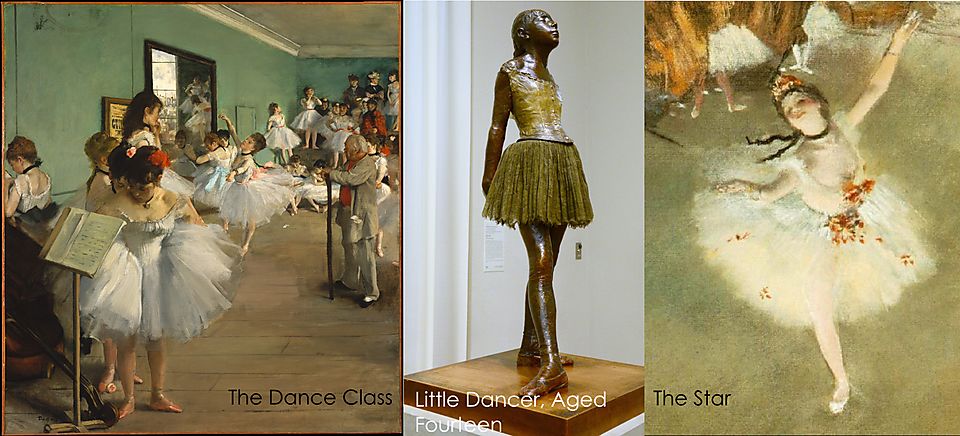
Many of Degas’ pastel drawings show ballerinas onstage such as The Star (1878), whilst his oil paintings tend to show behind-the-curtain aspects of ballet – notable pieces being The Dance Class and The Rehearsal (both 1874), which are accurate portrayals of the everyday lives of the ballerinas.
Degas made few sculptures, however Little Dancer, Aged Fourteen (1880) is one of the most popular artworks within his oeuvre.
All of the artworks simultaneously express Degas’ love for the grace and elegance of drawing and his obsession with capturing the elegant way in which the dancers moved – a unique artistic style among impressionists.
Degas’ focus on ballerinas expresses his fascination with both movement and people, as opposed to other impressionists of the 19th century such as Monet who focused on landscapes and nature. Ballerinas became the perfect muse for capturing both these aspects, and even as his eyesight failed, he continued to study and portray ballerinas in his art.
Many of Degas’ pastel drawings show ballerinas onstage such as The Star (1878), whilst his oil paintings tend to show behind-the-curtain aspects of ballet – notable pieces being The Dance Class and The Rehearsal (both 1874), which are accurate portrayals of the everyday lives of the ballerinas.
Degas made few sculptures, however Little Dancer, Aged Fourteen (1880) is one of the most popular artworks within his oeuvre.
The art of Degas reflects a concern for the psychology of movement and expression and the harmony of line and continuity of contour4
All of the artworks simultaneously express Degas’ love for the grace and elegance of drawing and his obsession with capturing the elegant way in which the dancers moved – a unique artistic style among impressionists.
Do you want to learn to write like this?