
Cubism
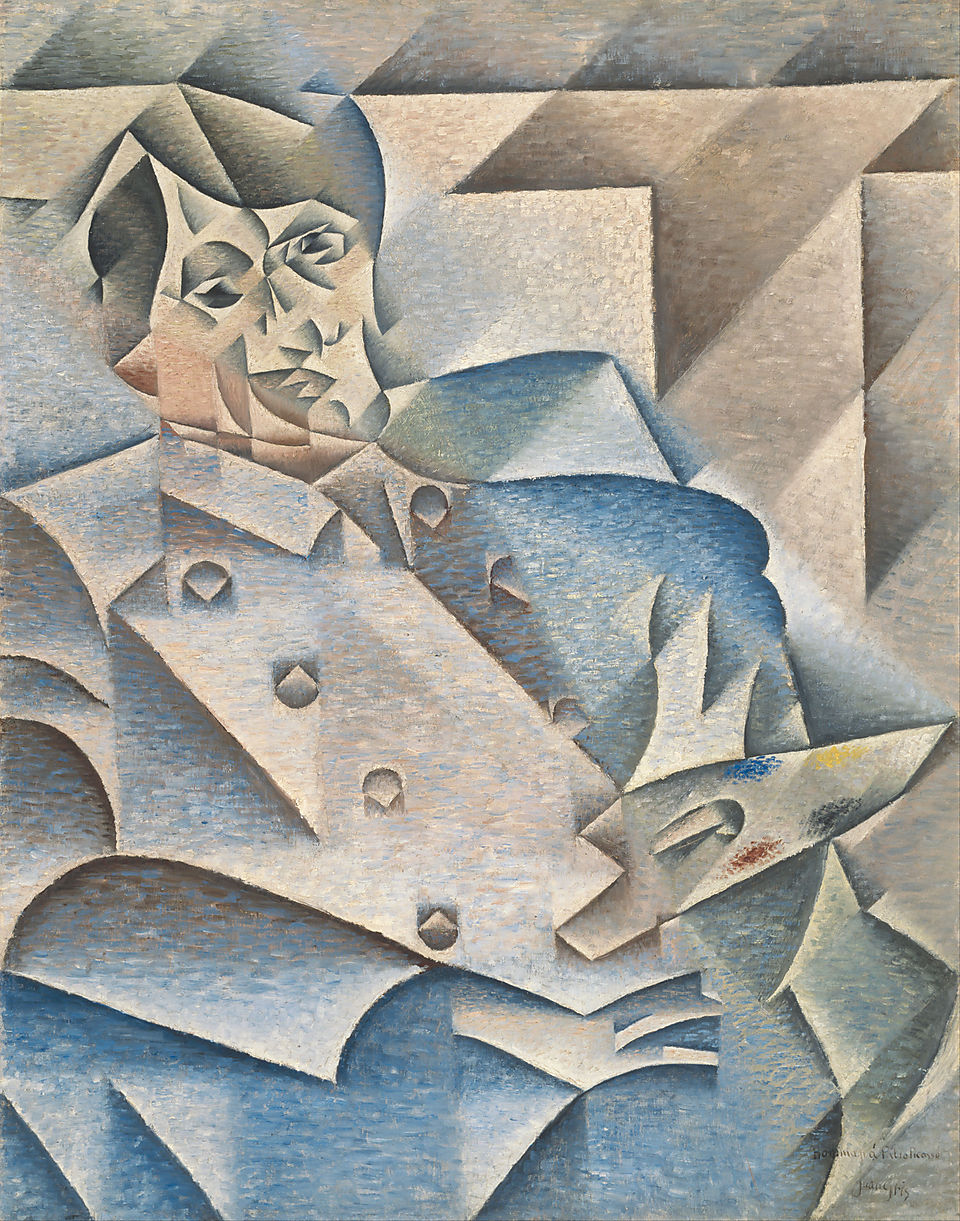
Juan Gris - Portrait of Pablo Picasso
Cubism is an early 20th century art movement. In Cubist artwork, objects are analyzed, broken up and reassembled in an abstracted form—instead of depicting objects from a single viewpoint, the artist depicts the subject from a multitude of viewpoints to represent the subject in a greater context.
The movement was pioneered by Pablo Picasso and Georges Braque. One primary influence that led to Cubism was the representation of three-dimensional form in the late works of Paul Cézanne.
The impact of Cubism was far-reaching and wide-ranging. In other countries Futurism, Suprematism, Dada, Constructivism, De Stijl and Art Deco developed in response to Cubism.
The movement was pioneered by Pablo Picasso and Georges Braque. One primary influence that led to Cubism was the representation of three-dimensional form in the late works of Paul Cézanne.
The impact of Cubism was far-reaching and wide-ranging. In other countries Futurism, Suprematism, Dada, Constructivism, De Stijl and Art Deco developed in response to Cubism.
Cubism adapted from Wikipedia and licensed by The Cultural Me under CC BY SA 3.0