
Conceptual Art
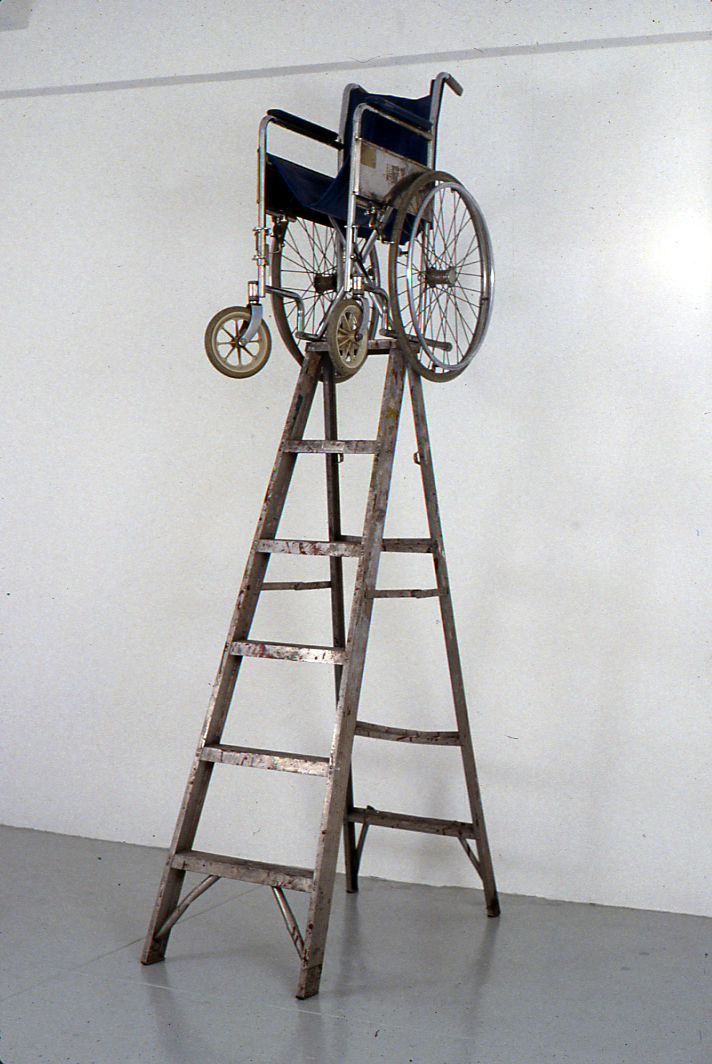
Untitled by John LeKay, 1991, ladder and wheelchair.
Conceptual art is art in which the concept(s) or idea(s) involved in the work take precedence over traditional aesthetic concerns.
Some works of conceptual art, sometimes called installations, may be constructed by anyone simply by following a set of written instructions. This method was fundamental to American artist Sol LeWitt's definition of Conceptual art, one of the first to appear in print:
"In conceptual art the idea or concept is the most important aspect of the work. When an artist uses a conceptual form of art, it means that all of the planning and decisions are made beforehand and the execution is a perfunctory affair. The idea becomes a machine that makes the art."
Through its association with the Young British Artists and the Turner Prize during the 1990s, in popular usage, particularly in the UK, "conceptual art" came to denote all contemporary art that does not practice the traditional skills of painting and sculpture.
Some works of conceptual art, sometimes called installations, may be constructed by anyone simply by following a set of written instructions. This method was fundamental to American artist Sol LeWitt's definition of Conceptual art, one of the first to appear in print:
"In conceptual art the idea or concept is the most important aspect of the work. When an artist uses a conceptual form of art, it means that all of the planning and decisions are made beforehand and the execution is a perfunctory affair. The idea becomes a machine that makes the art."
Through its association with the Young British Artists and the Turner Prize during the 1990s, in popular usage, particularly in the UK, "conceptual art" came to denote all contemporary art that does not practice the traditional skills of painting and sculpture.
Conceptual Art adapted from Wikipedia and licensed by The Cultural Me under CC BY SA 3.0