
Berlin Wall
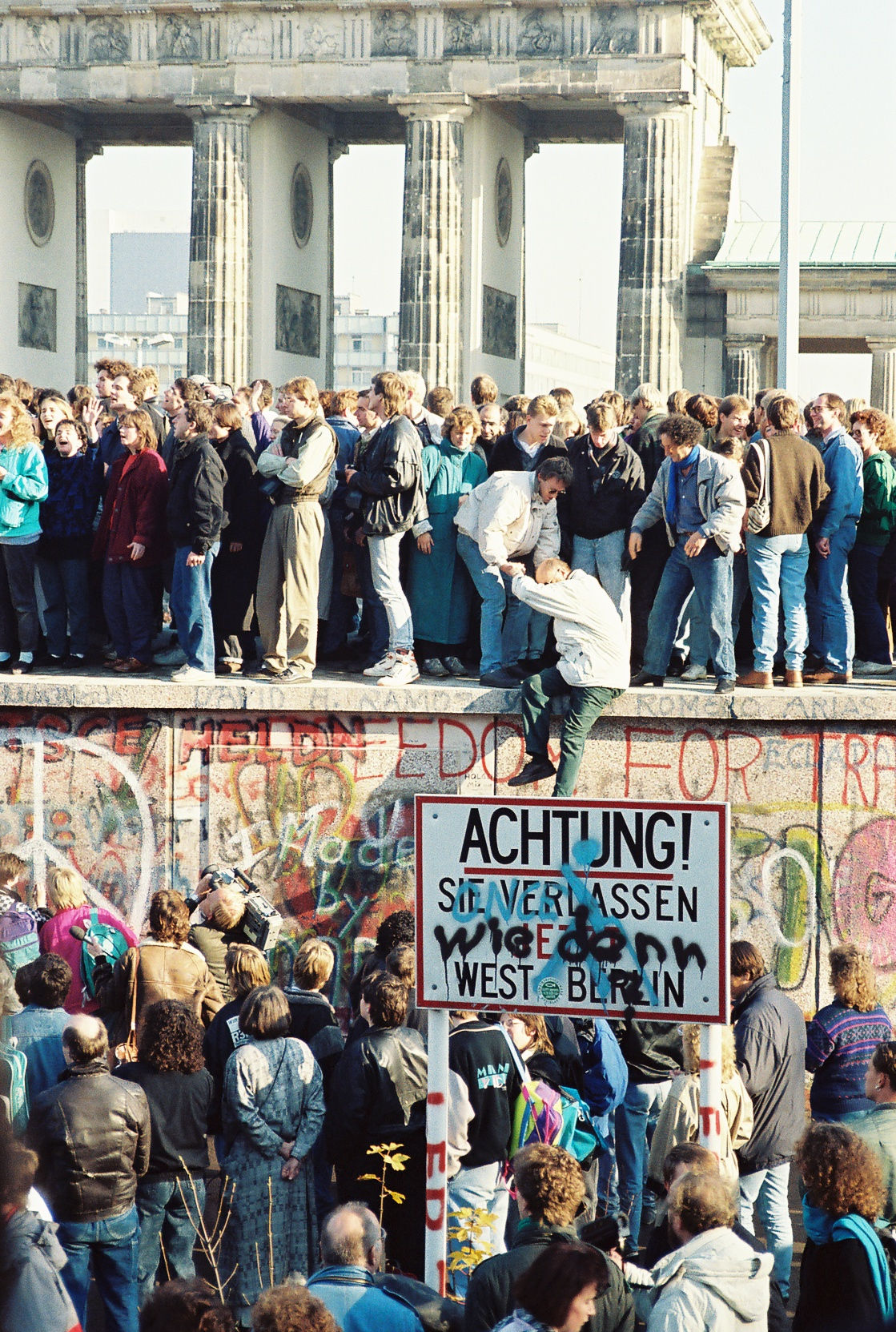
BerlinWall-BrandenburgGate
The Berlin Wall was a guarded concrete barrier that physically and ideologically divided Berlin from 1961 to 1989.
Constructed by the German Democratic Republic (GDR, East Germany), and coming into effect on 13 August 1961, the Wall cut off West Berlin from virtually all of surrounding East Germany and East Berlin until government officials opened it in November 1989.
The barrier included guard towers placed along large concrete walls, accompanied by a wide area (later known as the "death strip") containing defenses.
The Eastern Bloc portrayed the Wall as protecting its population from fascist elements conspiring to prevent the "will of the people" in building a socialist state in East Germany. However, before the Wall's erection, 3.5 million East Germans defected from the GDR. The erection of the Wall prevented almost all such emigration. During this period over 100,000 people attempted to escape and over 5,000 people succeeded, with an estimated death toll of 136 to over 200.
Along with the separate and much longer Inner German border, which demarcated the border between East and West Germany, it came to symbolize physically the "Iron Curtain" that separated Western Europe and the Eastern Bloc during the Cold War.
Constructed by the German Democratic Republic (GDR, East Germany), and coming into effect on 13 August 1961, the Wall cut off West Berlin from virtually all of surrounding East Germany and East Berlin until government officials opened it in November 1989.
The barrier included guard towers placed along large concrete walls, accompanied by a wide area (later known as the "death strip") containing defenses.
The Eastern Bloc portrayed the Wall as protecting its population from fascist elements conspiring to prevent the "will of the people" in building a socialist state in East Germany. However, before the Wall's erection, 3.5 million East Germans defected from the GDR. The erection of the Wall prevented almost all such emigration. During this period over 100,000 people attempted to escape and over 5,000 people succeeded, with an estimated death toll of 136 to over 200.
Along with the separate and much longer Inner German border, which demarcated the border between East and West Germany, it came to symbolize physically the "Iron Curtain" that separated Western Europe and the Eastern Bloc during the Cold War.
Berlin Wall adapted from Wikipedia and licensed by The Cultural Me under CC BY SA 3.0