Humans view themselves as the animal par excellence. However, Friedrich Nietzsche saw them as the sickliest, saying they had “wandered most dangerously from [their] instincts”.1
He observes that human consciousness — the root of morality — is an affliction. Eagles kill because that is their nature, but, unable to reflect, they have no free-will. Through reflection and pity, mankind invents the concept of “evil” to describe people’s animal instincts. Since strength is now a free rather than intrinsic action, humanity is separated from its nature.2
The weak amongst humanity decry the world as “sinful” and long for a “heaven” to ease their worldly suffering.34 The destructive instinct of mankind is then turned inward to deny itself, and the weak attempt to destroy everything the strong created for the world.5
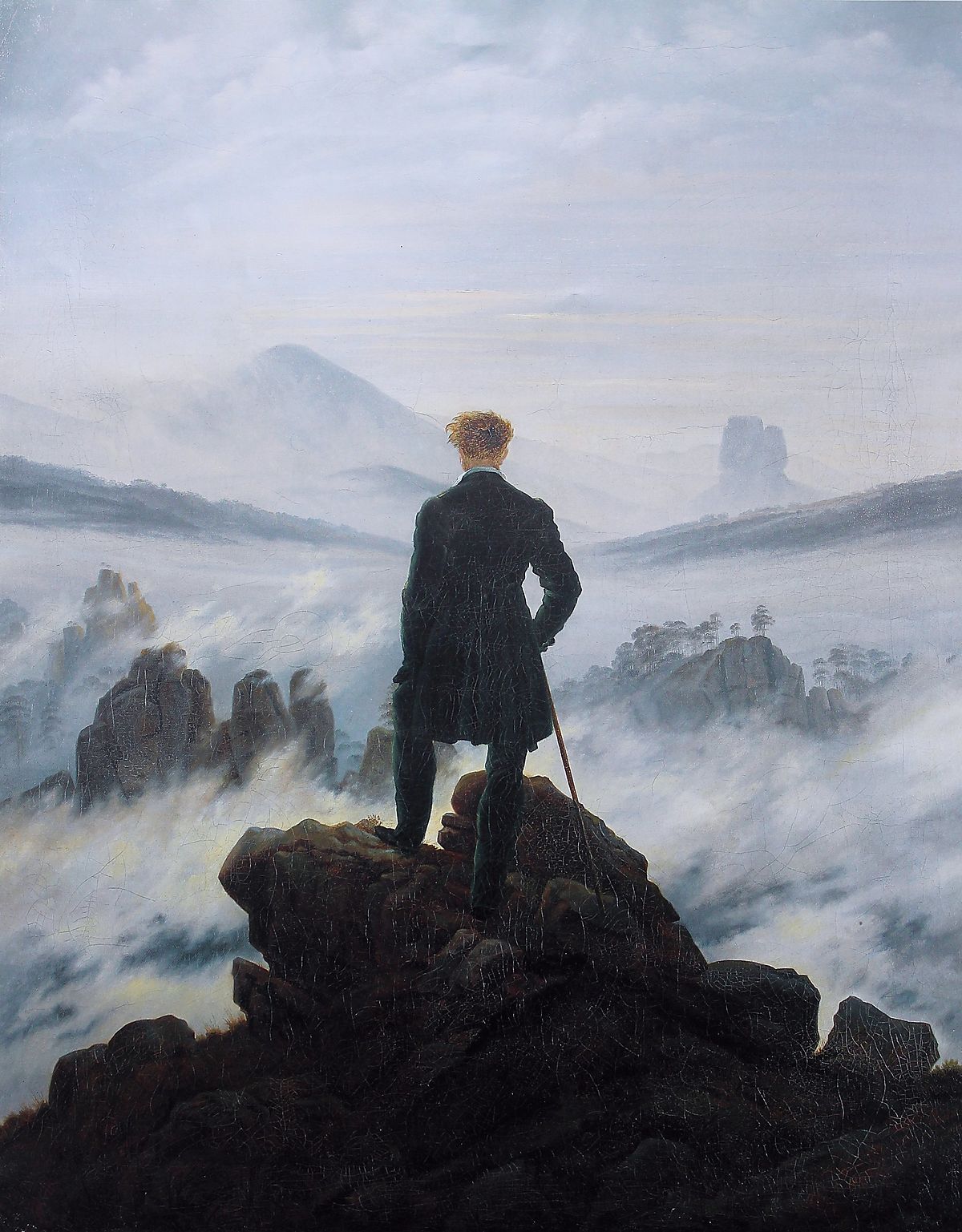
From a young age, Nietzsche suffered from a neurological disease which gave him intense migraines. He spent much of his time in solitude, walking the mountains and writing in short, frantic bursts. In addition, his love life was a failure and his books were largely unsuccessful in his lifetime.
One may have misgivings about his philosophy; however comfort was not an option for Nietzsche, and this forced him to confront the dark side of reality with courage. He believed that the strong accepted their suffering and found meaning in it, striving to overcome it, whilst the weak wished for heaven.6 His most poetic expression of this is simply “If you have a why in life, you can bear almost any how.”7
F. W. Nietzsche. The antichrist. Gutenberg, 14 [EBook #19322]. 2006. 59
F. W. Nietzsche. The genealogy of morality. Gutenberg, First essay, 11 [EBook #52319]. 2016. 39-43
F. W. Nietzsche. The antichrist. Gutenberg, 27 [EBook #19322]. 2006. 33, 89, 103
F. W. Nietzsche. The genealogy of morality. Gutenberg, First essay, 13 [EBook #52319]. 2016. 45-47
F. W. Nietzsche. The genealogy of morality. Gutenberg, Second essay, 16 [EBook #52319]. 2016. 100-102
F. W. Nietzsche. Beyond Good and Evil. Gutenberg, part VII [EBook #4363]. 2009. 225
F. W. Nietzsche. Twilight of the idols. Gutenberg, Maxims and arrows, 12 [EBook #52263]. 2016. 2
Edward Davies
London
My studies in psychology taught me that our true nature is not always easy to accept. Nietzsche’s constant struggle with illness allowed him to see many facets of life that most humans try to avoid. This has always inspired me to acknowledge the more painful facets of our nature. His pronouncements, although shocking, when properly understood can give us an insight into what it means to be human.