
Ajanta Caves
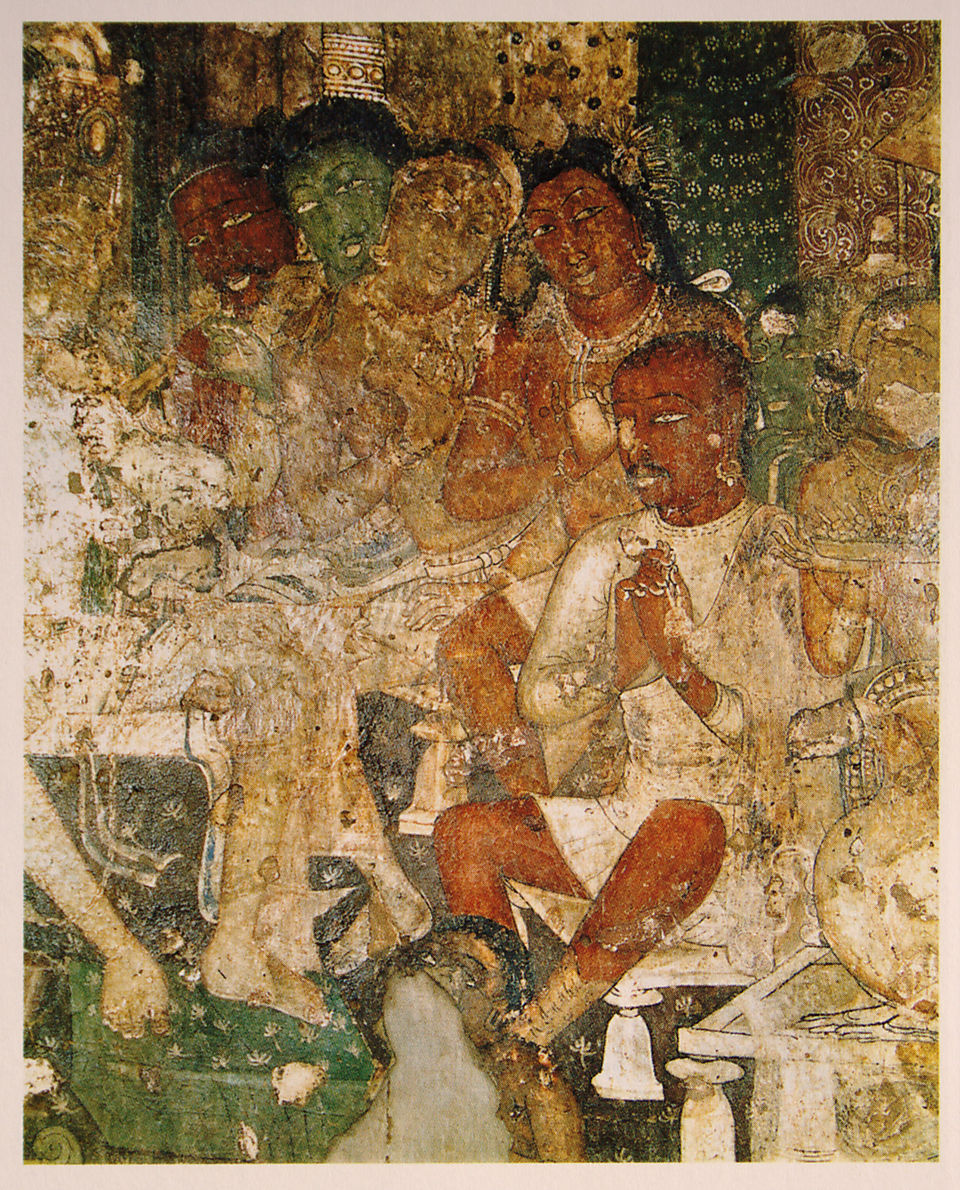
Hamsa jâtaka, Ajanta, India
The Ajanta Caves are approximately 30 rock-cut Buddhist cave monuments which date from the 2nd century BCE to about 480 CE found in the Maharashtra state of India.
The Ajanta Caves constitute ancient monasteries and worship-halls of different Buddhist traditions carved into a 250-feet wall of rock. The caves include paintings depicting the past lives and rebirths of the Buddha and rock-cut sculptures described as among the finest surviving examples of ancient Indian art, and masterpieces of Buddhist religious art that influenced the Indian art that followed.
The caves were built in two phases, the first phase starting around the 2nd century BCE, while the second phase was built around 400–650 CE.
Textual records suggest that these caves served as a monsoon retreat for monks, as well as a resting-site for merchants and pilgrims in ancient India. Since 1983, the caves have been a UNESCO World Heritage Site.
The Ajanta Caves constitute ancient monasteries and worship-halls of different Buddhist traditions carved into a 250-feet wall of rock. The caves include paintings depicting the past lives and rebirths of the Buddha and rock-cut sculptures described as among the finest surviving examples of ancient Indian art, and masterpieces of Buddhist religious art that influenced the Indian art that followed.
The caves were built in two phases, the first phase starting around the 2nd century BCE, while the second phase was built around 400–650 CE.
Textual records suggest that these caves served as a monsoon retreat for monks, as well as a resting-site for merchants and pilgrims in ancient India. Since 1983, the caves have been a UNESCO World Heritage Site.
Ajanta Caves adapted from Wikipedia and licensed by The Cultural Me under CC BY SA 3.0