
Elizabeth I Propaganda of Portrait Miniatures
Elizabeth I and the Propaganda of Portrait Miniatures

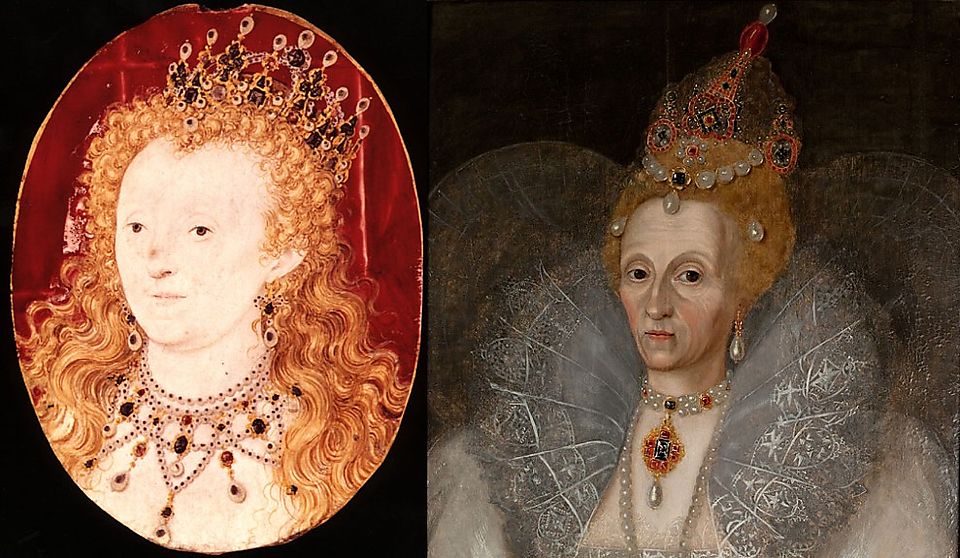
Against a sumptuous red backdrop, the last Tudor Queen is regally adorned with rubies. Her skin is smooth and wrinkle-free, her long red tresses hang loose: a striking image of the Virgin Queen. This portrait miniature of Elizabeth I by Nicholas Hilliard was widely circulated at that time. However, the portrait was an inaccurate representation, as it was painted late in her reign, around 1600, when she had reached her 60s.
There was a reason why she would want to portray herself in this way. By 1600, she was no longer able to birth a natural heir, thereby posing a threat to the Tudor lineage. Elizabeth would also have been acutely aware of the dangers of being a single female monarch at the time. The theologian John Knox’s attack that women bearing authority were “repugneth to nature”1 shows at least one influential attitude to female sovereigns of the day.
Faced with these uncertainties, the Queen sought to control her public image, to propagate the idea that she was an ageless ruler. A draft proclamation of 1563 reveals
The truth would emerge one day. A recently unveiled portrait3, probably by Marcus Gheeraerts the Younger, and painted around the same time as Hilliard’s miniature, reveals the true image of an ageing queen.
There was a reason why she would want to portray herself in this way. By 1600, she was no longer able to birth a natural heir, thereby posing a threat to the Tudor lineage. Elizabeth would also have been acutely aware of the dangers of being a single female monarch at the time. The theologian John Knox’s attack that women bearing authority were “repugneth to nature”1 shows at least one influential attitude to female sovereigns of the day.
Faced with these uncertainties, the Queen sought to control her public image, to propagate the idea that she was an ageless ruler. A draft proclamation of 1563 reveals
some special person, that shall be by her allowed, shall have first finished a portraiture thereof, after which finished, her Majesty will be content that all other painters... at their pleasure follow the said pattern or first portraiture.2
The truth would emerge one day. A recently unveiled portrait3, probably by Marcus Gheeraerts the Younger, and painted around the same time as Hilliard’s miniature, reveals the true image of an ageing queen.
Do you want to learn to write like this?